
• Entr'acte
  • Living Landscapes
  • Dispatches
  • Natural History
  • Panthera
  • Elephantidae
  • Bibliothèque
  • About
  • Menu

Strachan Photography

  • Entr'acte
  • Living Landscapes
  • Dispatches
  • Natural History
  • Panthera
  • Elephantidae
  • Bibliothèque
  • About
©Juljuro-Pixabay

©Juljuro-Pixabay

#PrayForAmazonas

August 21, 2019
“At first, I thought I was fighting to save rubber trees. Then I thought I was fighting to save the Amazon rainforest. Now I realize I am fighting for humanity.”
— Chico Mendes

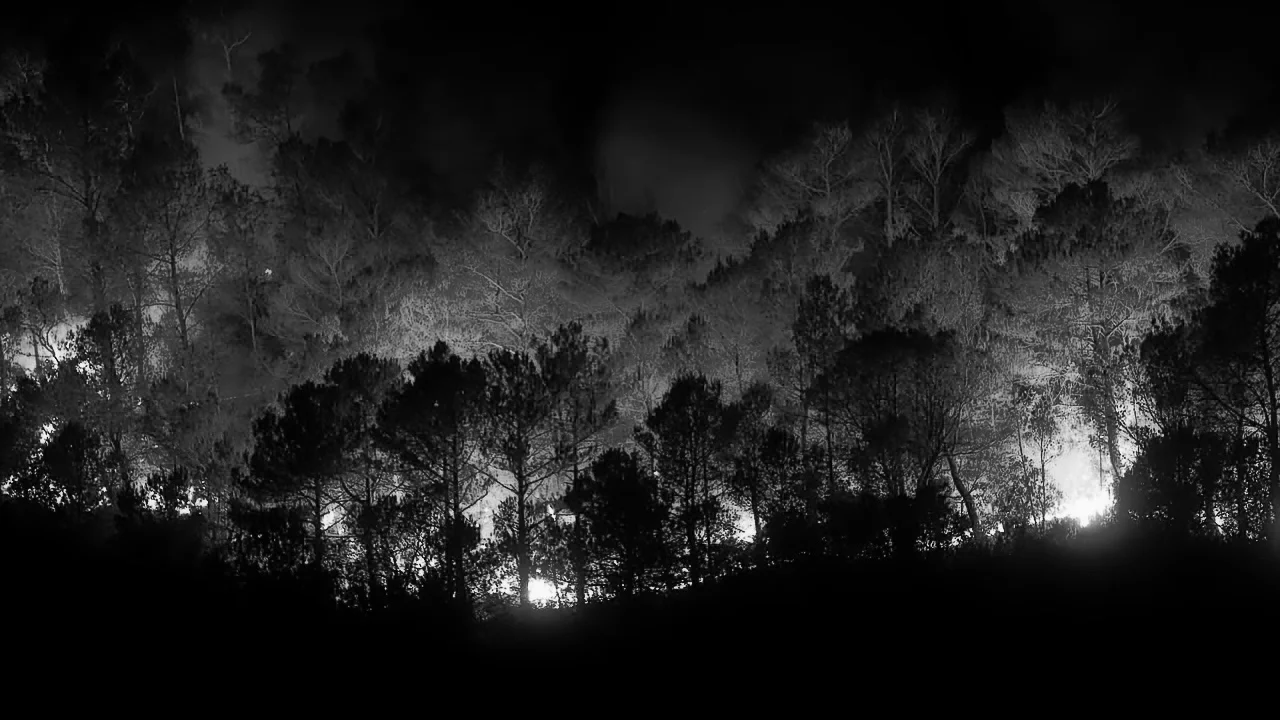
People are praying for the Amazon as the number of wildfires in Brazil soars. The hashtag #PrayForAmazonas was trending at No.5 early this morning on Twitter. 

The number of forest fires in Brazil has grown 82% in the nearly eight months so far in 2019, according to Brazil’s National Institute for Space Research. And while the country’s populist president Jair Bolsonaro is a notorious backer of burning the Amazon the ground, to make way for soybean plantations and cattle ranches, not all of this can be entirely put down to him, tempting as that might be to some environmental NGOs, and anyone with a working brain.

The report has caused concern for many people — sentient people, anyway, that educated, informed part of the population that doesn’t fall for populists — who worry about the Amazon rainforest and, just as importantly, the indigenous people who live there.

“The world is increasingly worried about the future of the Amazon rainforest,” an NPR op-ed column warned this past weekend. “Deforestation there has soared since Brazil’s far-right President Jair Bolsonaro took office in January.”

Jair, sim, but there’s more to it than that.

The Amazon crisis reflects a larger issue: The twin effect of worldwide climate upheaval — the ice melt in the Arctic has reached the point that even the most pessimistic scientific projections predicted wouldn’t happen until the year 2070 — and unchecked population growth. The world’s human population has now tipped past 7.5 billion and is growing all the time, especially in the developing world, those regions most affected by climate change.

Inevitably, overconsumption and the global demand for a lifestyle equal to or better than that of the Boomer generation is taking an ever-bigger bite out of our planet’s ever-dwindling supply of natural resources.

Researchers say the Brazil fires — virtually all of them — are the direct result of human activity, not lightning strikes or other natural causes that can be put down to the cycle of life. Some of the fires are accidental, many are deliberate. They share a common theme, though: They destroy everything in their path and their effects are likely to be measured not in years or even decades but generations.

The fires are exacerbated by drought, increased heat, and expanded use of the land for logging, industry and farming. Bolsonaro’s policies of deforestation, driven by both the local economy and overseas investment, are robbing our planet of its most important, effective carbon sink. Rainforests absorb carbon and help counter global, worldwide carbon emissions; we lose the rainforests at our peril. And the Amazon is the largest, most biodiverse and important rainforest of them all.

It’s a no-brainer. These days, though, brains seem to be in short supply, especially among those who vote for populists like Bolsonaro and the Philippines’ Rodrigo Duterte, another leader of another nation state in the tropics buffeted by the climate crisis and misuse of natural resources, everything from pollution,  illegal mining and logging to deforestation, dynamite fishing, coastal erosion, mass extinctions and the illegal wildlife trade.

#PrayForAmazonas, yes — but perhaps it’s time for another hashtag, too: #StopVotingForAssholes.
©Juljuro-Pixabay

©Juljuro-Pixabay


Tags: #PrayForAmazonia, #PrayForAmazonas, Chico Mendes, Amazon rainforest, (Brazil) National Institute for Space Research, Amazonia, Amazonas, Amazon Basin, wildfires, climate emergency, carbon emissions, Jair Bolsonaro, Rodrigo Duterte, logging, deforestation, NPR, rainforest, #StopVotingForAssholes
©Pixabay

©Pixabay

July Hottest Month on Record. Chinese Hoax!

August 18, 2019
“Saving our planet, lifting people out of poverty, advancing economic growth . . . these are one and the same fight. We must connect the dots between climate change, water scarcity, energy shortages, global health and food security. Solutions to one problem must be solutions for all.”
— Ban Ki-moon

Oh, those wacky Chinese hoaxers. Turns out this past July was the hottest month on record, after all, according to the US National Oceanic and Atmospheric Administration. Facts are so inconvenient. “An inconvenient truth,” you might say. What’s a hoaxer to do?

Not that the climate deniers will notice, mind. Or care. They’ll blame the liberal news media, and their headlines like, It’s official: July Was Hottest Month on Record (NBC News), July 2019 Was Earth’s Hottest Month On Record, US Agency Says (South China Morning Post), NOAA Confirms July Was Hottest Month Ever Recorded (New York Times), The Hottest July: How Climate Change Is Breaking Temperature Records in 2019 (TIME), July Was Hottest on Record (Wall Street Journal), and that bastion of leftist Commie pinko reportage, The Weather Channel: July 2019 Was Earth’s Hottest Month on Record.

MarketWatch, ScienceAlert, Discover Magazine, Scientific American, EcoWatch and Livescience.com all weighed in. Even Fox News weighed in — begrudgingly — with the more region-specific Heat Wave Threatens Notre Dame Repair Efforts as Temperature Records Tumble Across Europe.

Unsurprisingly, the New York Times’ Somini Sengupta and Wieyi Cai took the wider, more far-reaching view with a cautionary big-picture look at what it means with their Aug. 6 story headed A Quarter of Humanity Faces Looming Water Crises. In the immortal words of Albert Einstein, “Any fool can know. The point is to understand.”

Countries that are home to one-fourth of Earth’s population face an increasingly serious threat:

The prospect of running out of water.

From South Africa and Namibia to India and Iran, 17 countries around the world are currently experiencing “extreme high water stress.” Technically, that means they are using almost all the water they have — this, according to the World Resources Institute, which published up-to-date data late last month.

More than a third of major urban areas — cities with 3 million or more people — are under high or extreme water stress, including Chennai, Los Angeles, Mexico City, New Delhi, Dhaka and São Paulo.

Mindful that contrarians and climate deniers will question every figure at every opportunity, the Urban Resources Institute cited the U.N.’s World Urbanization Prospects 2018 report as a source for its urbanization figures.

Mentioning cities by name isn’t simply a question of semantics: Last year, Cape Town narrowly avoided what scientists call Day Zero, the day when a major city runs out of water.

Climate change is not solely to blame, but it plays a major role. As rainfall becomes more erratic, the water supply becomes  less reliable. Much as the loss of sea ice in the far north makes sea ice melt even faster — the ice no longer reflects the heat of the sun back into the atmosphere, which speeds up the melting process even more — hotter days makes standing water in lakes and reservoirs evaporate that much more quickly.

Clearly, if this is all a Chinese hoax, it’s a mighty effective one. As hoaxes go.

©NASA-NOAA

©NASA-NOAA


Tags: global heating, climate emergency, inconvenient truth, heat wave, hottest July, hottest month on record, National Oceanic and Atmospheric Administration, NOAA, Ban Ki-moon, water crisis, Albert Einstein, humanity, temperature records, World Resources Institute, UN World Urbanization Prospects, Cape Town, Day Zero, New York Times, Somini Sengupta, Wieyi Cai, Chinese hoax
©Press Association

©Press Association

Make Room! Make Room!

August 16, 2019
“We are a plague on the Earth. Itʼs coming home to roost over the next 50 years or so. Itʼs not just climate change; itʼs sheer space, places to grow food for this enormous horde. Either we limit our population growth or the natural world will do it for us, and the natural world is doing it for us right now.”
— David Attenborough

I’ve banged on about Soylent Green in this space several times already, in the recent past. Richard Fleischer’s 1973 sci-fi flick about too many people living on an overheated world in a not-too-distant dystopian future wasn’t particularly good, or popular, but it has proved eerily prescient about the world we’re living in today. Soylent Green, based on a novel written in 1966, was set in the year 2022. That was then, this is now.

And while rapacious corporations haven’t turned people into graham crackers yet — Soylent Green’s most talked-about plot twist —  who today would put it past them?

Soylent Green’s more credible — and less catchy — prediction was its vision of a future world dominated by hellish, overcrowded cities divided along economic lines, where rampant homelessness is taken for granted and the air is too dirty to breath. The world of the future, according to Soylent Green, is of a despoiled planet that can no longer grow the food needed to feed “a near-future world where 7 billion people live cheek-by-jowl.”

Well. According to recent figures assembled by the World Bank, we’re already past 7.5 billion and counting. We’re past the point, in other words, that science-fiction writers like Harry Harrison (author of the original novel Make Room! Make Room!) foresaw as humanity’s worst-case scenario, unlikely in our lifetimes. After all, they call it science fiction for a reason.

It was hard not to think about Soylent Green the other day, when Sir David Attenborough, a patron of the climate activist group Population Matters, told the Radio Times — as reported in the Daily Telegraph and elsewhere — that a “frightening explosion in human numbers” threatens the future of humanity itself.

(Some detractors dislike the phrase “Save the planet,” since the planet itself will likely remain long after humans, and possibly life itself,  have died out.)

“We keep putting on programs about famine in Ethiopia; thatʼs whatʼs happening,” Attenborough told the Radio Times. “Too many people there. They canʼt support themselves — and itʼs not an inhuman thing to say. Itʼs the case. Until humanity manages to sort itself out and get a coordinated view about the planet itʼs going to get worse and worse.”

Attenborough said humans are threatening their own existence and that of other species by using up the world’s resources. It isn’t just a question of overpopulation but overconsumption.

The birth rate in the developing world may be increasing exponentially in some cases, but the real heart of the problem — and possibly the easiest for climate-conscious citizens of the developed world to tackle — is our own desire for more, more, more. An inconvenient truth of climate denial is that, even as educated people in the western world have smaller families, it doesn’t much matter if one person in, say, Edinburgh, consumes as much in a single year as an entire village in Ethiopia.

It’s not too late, Attenborough insists in the Netflix documentary program Our Planet, though we’re getting there. It will take courage and fortitude, though, a willingness to admit our own mistakes and the resolve to do something about it.

That’s starts with choosing the right leaders, and deciding what we can do ourselves, on our own.

It’s a big job, and a vitally important one. It can’t all be left to a16-year-old climate activist.


Tags: David Attenborough, Radio Times, Soylent Green, Richard Fleischer, Harry Harrison, Population Matters, overpopulation, food insecurity, famine, overcrowding, future, birth rate, overconsumption, Our Planet, Netflix, inconvenient truth
©Steffen M Olsen via Twitter.

©Steffen M Olsen via Twitter.

Greenland On Thin Ice

August 14, 2019
“The Arctic is a bellwether for the unequal impact of global warming. As countries struggle to limit future risks and overall warming to 1.5°C, many Arctic and Greenlandic residents are already living in climates that have changed by more than this, in less than a lifetime. Therein lies the paradox. While satellites and sensors monitor the surface of Greenland’s ice sheet, chase icebergs and scan sea ice daily, relatively little is know about what the residents of Greenland think about their changing surroundings.”
— Kelton Minor, lead author, Greenlandic Perspectives Survey

The name Greenland owes its existence to early Scandinavian settlers. Sadly, the old stories about early sailors seeing a giant sheet of ice and naming it ironically are just that: old stories. The more widely held explanation, according to Norse histories, is that Erik the Red briefly settled the new land after being exiled from Iceland in 982 AD. He is believed to have named the new land Grfnland to encourage more settlers to move there. He deliberately gave the land a more appealing name than the reality, explaining that, “People would be attracted there if it had a favourable name.” He lived through two winters on Greenland without respite, and knew the long-term survival of any settlement there would hinge as many people as possible. Ironically, sustained famine and consistently hard winters in Iceland convinced many would-be settlers to do exactly that.

Only now, more than a full millennium later, Greenland is threatening to become, if not green year-round exactly, certainly free of ice, its defining feature, in mid-summer.

The Arctic is burning. Satellite evidence suggests the wildfires burning across the far north this uncommonly dry, hot summer have created a cloud of smoke larger in area than the European Union. It’s a sight not seen in 10,000 years, climate scientists warn. This isn’t global warming. It’s global scorching.

The UN climate summit next month has been described as being potentially decisive, but the die is already cast: The world’s leading democracies are led by climate-denying populists and despots, and they have been put there by voters — citizens and residents, educated and uneducated — in the very democracies they claim to represent.

We didn’t need a survey to tell is that Greenland’s islanders are struggling to reconcile the impact of global heating with their traditional way of life, but we now have exactly that.

The first-ever national survey examining the human impact of the climate emergency in the far north shows that nine in 10 Greenland residents accept that the climate crisis, oddly enough, is not a Chinese hoax. Nor was the study some half-assed cold-call survey conducted by a call-centre sweatshop in the Philippines. The Greenlandic Perspectives Survey was carried out by the University of Copenhagen’s Center for Social Data Science in association with the University of Greenland and the Kraks Fond Institute for Urban Economic Research.

Experts, in other words.

And on this issue, the experts are not divided.

The study sampled 2% of the population over an area nearly three times the size of France. And while 2% of the population might not sound like much, an equivalent study in the UK would have sampled nearly 1 million respondents.

Greenland residents are often overlooked by data science; island residents are scattered across roughly 20 small towns and 60 villages, nearly all of them situated on a narrow coastal strip. As with many northern Inuit communities in Canada, Greenland faces some of the most acute social issues in the world. Alcoholism and disproportionately high rates of suicide play an outsized role in the day-to-day struggle for survival.

The UN Climate Change Summit, hosted by UN Secretary-General António Guterres, will convene in New York on Sept. 23. The race is on, advance banners for the summit declare. It is a race we can win. It is a race we must win.

Not for the first time, people can no longer rely on their elected leaders to do the right thing — to the extent they could never rely on the Donald Trumps and Jair 34t5 of the world to do the right thing about anything.

https://www.un.org/en/climatechange/

©Steffen graphic (map).jpg
Tags: Greenland, Grfnland, Erik the Red, Arctic summer, global heating, climate emergency, UN Climate Change Summit 2019, Paris Agreement on Climate Change, Climate Action Summit, UN Secretary-General, António Guterres, Sustainable Development Goals, glacial ice melt, Greenlandic Perspectives Survey, University of Copenhagen Center for Social Data Science, University of Greenland, Kraks Fond Institute for Urban Economic Research
©Alex Strachan - David Sheldrick Wildlife Trust

©Alex Strachan - David Sheldrick Wildlife Trust

World Elephant Day: Cloudy Future for World's Largest Land Animal

August 12, 2019
“Of all African animals, the elephant is the most difficult for man to live with, yet its passing — if this must come — seems the most tragic of all. I can watch elephants, and elephants alone, for hours at a time, for sooner or later the elephant will do something very strange such as mow grass with its toenails or draw the tusks from the rotted carcass of another elephant and carry them off into the bush. There is mystery behind that masked grey visage, and ancient life force, delicate and mighty, awesome and enchanted, commanding the silence ordinarily reserved for mountain peaks, great fires, and the sea.”
— Peter Matthiessen, The Tree Where Man Was Born

Elephants are familiar, majestic, sociable and — like so many wild creatures we share planet Earth with — in trouble.

The threats are the usual suspects but, increasingly, the deepening climate crisis is having a growing and disproportionate effect, owing to drought, famine and overpopulation, exacerbated by overconsumption. 

In areas where elephants still cling to much of their former range — Botswana’s Chobe National Park and the marshlands of Botswana’s Okavango delta, a new, unexpected problem has presented itself: Too many elephants, crowded into too small an area. Already-large elephant herds are growing larger, which in turn is putting more strain on what precious little tree cover and water resources remain.

It’s World Elephant Day today.

That would normally be a day for celebration. As with World Lion Day a few days ago, though, the 2019 edition is more appropriately a day of reflection than a day to celebrate.

It’s a day to reflect on the things that make elephants unique, that give us wonder and joy, and give those who’ve dedicated their lives — and in some cases given their lives — the energy and determination to dig down even deeper.

This World Elephant Day, it’s worth noting that, in addition to being amazing animals, elephants actually make life better for us, often in surprising ways. The conservation NGO Human Nature and the filmmakers behind the documentary My Africa recently singled out four ways.

Elephants plant trees and help fight climate change.

Recent studies show that elephants help protect forests by distributing the seeds of trees. Because they roam over such wide distances, elephants play a key role in spreading tree seedlings. 

Scientists have documented lower tree diversity in forests that have lost elephants. Keeping forests healthy ensures trees continue to store carbon in their trunks, roots and soil, which in turn helps reduce the effects of climate change.

Protecting elephants reinforces local safety and security. 

Poaching and wildlife trafficking undermine the safety of local villages by provoking violence between hunters and communities. At numerous conservancies throughout Africa, such as Kenya’s Lewa Wildlife Conservancy, rangers are trained, credentialed police reservists, who respond to both wildlife and non-wildlife crimes in the area.

Elephants don’t just look after elephants. 

Elephants are engineers. They push over trees, which encourages the growth of grasslands. They excavate waterholes and fertilize the soil, which helps other animals survive. They call it the circle of life for a reason.

Elephants generate much-needed tourist revenue.

A thriving tourist trade enables elephants to bring in money for local communities. A study estimated the tourism value of a single elephant at $1.6 million USD throughout its lifetime.

There’s a reason Botswana remains southern Africaʼs most prosperous country, despite the recent lifting of the ban on trophy hunting. Tourism — most of it centred in the countryʼs verdant, wildlife-rich northwestern corridor — accounts for about 10% of the countryʼs economy. That figure has only grown as Botswana’s reputation as a safe, high-end travel destination has strengthened.

The crisis facing the world’s remaining wild elephants may be dire this World Elephant Day, but if Botswana’s past experience proves anything, it’s that there’s a reason for hope — however small.

©Alex Strachan - David Sheldrick Wildlife Trust

©Alex Strachan - David Sheldrick Wildlife Trust


Tags: World Elephant Day, elephant populations, elephant conservation, Chobe National Park, Human Nature, My Africa, tree diversity, Lewa Wildlife Conservancy, wildlife tourism, David Sheldrick Wildlife Trust
Prev / Next

Journal

“Man is modifying the world so fast and so drastically that most animals cannot adapt to the new conditions. In the Himalaya as elsewhere there is a great dying, one infinitely sadder than the Pleistocene extinctions, for man now has the knowledge and the need to save the remnants of his past.”

— Peter Matthiessen


Featured Posts

Featured
1.bourdain hong kong.jpg.png
Aug 19, 2025
Bourdain in Hong Kong
Aug 19, 2025
Aug 19, 2025
1.ABPU_S11_Armenia3.jpg.png
Jul 21, 2025
Bourdain in Armenia
Jul 21, 2025
Jul 21, 2025
art1.jpg.png
Jun 25, 2025
Bourdain in Uruguay
Jun 25, 2025
Jun 25, 2025
1.bourdain congo2.jpg.png
Jun 8, 2025
8 June — Bourdain Remembered
Jun 8, 2025
Jun 8, 2025
1.Screen Shot 2025-05-27 at 5.41.13 AM.jpg.png
May 31, 2025
Bourdain in Southern Italy (with Francis Ford Coppola)
May 31, 2025
May 31, 2025
8.dsc09592.jpg.png
May 17, 2025
Bourdain in Puerto Rico
May 17, 2025
May 17, 2025
9.11216842-anthonybourdain-srilankajpg-c-web.jpg.png
May 4, 2025
Bourdain in Sri Lanka
May 4, 2025
May 4, 2025
b.art1.png
Apr 17, 2025
Bourdain in Lagos, Nigeria
Apr 17, 2025
Apr 17, 2025
1.art website.jpg.png
Apr 10, 2025
Bourdain in the French Alps (avec Eric Ripert)
Apr 10, 2025
Apr 10, 2025
1.art (2).jpg.png
Apr 2, 2025
Bourdain in Singapore
Apr 2, 2025
Apr 2, 2025