• Entr'acte
  • Living Landscapes
  • Dispatches
  • Natural History
  • Panthera
  • Elephantidae
  • Bibliothèque
  • About
  • Menu

Strachan Photography

  • Entr'acte
  • Living Landscapes
  • Dispatches
  • Natural History
  • Panthera
  • Elephantidae
  • Bibliothèque
  • About
©Alex Strachan - Maasai Mara National Reserve, Kenya

©Alex Strachan - Maasai Mara National Reserve, Kenya

World Lion Day: Lions Are Vanishing

August 10, 2019
“Africa’s parks hold the most charismatic species on the planet – giraffe, elephant, hippo, zebra, lion, leopard and cheetah – a true global heritage. It’s up to all of us to help cover the costs of protecting these species. If the lion goes extinct, all these other species will go as well. ”
— Dr. Craig Packer

Food for thought on this World Lion Day:

Little more than a century ago, there were more than 200,000 wild lions living in Africa. Today, there are only about 20,000; lions are extinct in 26 African countries.

The lion is listed as ‘vulnerable’ on the IUCN Red List of Threatened Species, owing mostly — though not exclusively — to habitat loss.

Other facts of interest about lions, according to the World Wide Fund for Nature (WWF):

• Lions live in prides with related females and up to three unrelated males; female lions live together their entire lives. A typical pride has about 15 members, though some prides as large as 40 individuals have been observed.

• The lion is the second largest of the big cats, by length and weight: A male weighs about 500 pounds and grows to eight feet in length. It sounds impressive, but tigers are actually larger, reaching 850 pounds and 11 feet long.

• A lion may sleep up to 20 hours a day.

• A lion’s heels don’t touch the ground when it walks.

• Even though the lion is sometimes referred to as the “king of the jungle,” it actually lives in grasslands. The expression may have come from a misplaced association between Africa and jungles, or may refer to a less literal meaning of the word jungle.

• A lion can run for short distances at 50 mph and leap as far as 36 feet.

• A lion’s roar can be heard from as far as 5 miles away.

• The lion was once found throughout Africa, Asia and Europe but now exists only in Africa with one exception. The last remaining Asiatic lions are to be found in Sasan Gir National Park in India, which was primarily created to protect the species. Currently, there are roughly 350-400 lions in the park.

• Lions live for about 10-14 years in the wild, but have been known to live as long as 20 years in captivity.

This last figure raises any number of moral, ethical

and emotional questions. Since lions live longer in captivity, that would seem to suggest they are happier there, but the reality is that life in a cage, or even a large, outdoor pen, is no life for a predator.

The truth, too, is more complicated for lions in the wild, where it’s all too easy to infer that the combination of stress and constantly having to hunt for food wears knocks years off the back end of a lion’s life.

The hard truth is that few if any lions die of old age. Pride males are deposed by younger challengers; evicted from the pride and are often injured from a fight and so are incapable of hunting on their own. Long before they have a chance to starve, they’re set upon by other predators, especially hyenas and other lions, because they’re perceived to be a threat to a finite amount of food resources.

Older females are not chased out of the pride, but as they lose their ability to hunt, they’re often relegated to the back of the line when food is scarce. Lions are social animals — the most social of the big cats — but that sociability only goes so far.

“Lion conservation is expensive,” University of Minnesota field biologist and Serengeti lion researcher Dr. Craig Packer explained recently. Packer, author of Into Africa (2004) and Lions in the Balance (2015), is widely considered to be the world’s leading authority on lion behaviour and conservation. “The price is far too high to be borne entirely by the poorest countries on Earth. Lions sometimes eat people and livestock; these devastating losses are suffered by impoverished rural communities. In the U.S., U.K. and European Union, national parks are funded by tax revenues. African parks are funded by visitor entrance fees or hunting fees. However, these revenues are far too small for wildlife to ‘pay its own way.’”

The future, as always, looks uncertain. World Lion Day celebrates one of nature’s most iconic, recognizable animals, but who’s to say what the future holds?

https://blog.nationalgeographic.org/2016/10/11/african-lions-on-the-brink-a-conversation-with-lion-expert-craig-packer/

©Alex Strachan - Maasai Mara National Reserve, Kenya
©Alex Strachan - Maasai Mara National Reserve, Kenya

Tags: World Lion Day, lions, Craig Packer, Into Africa, Lions in the Balance, Asiatic lions, IUCN Red List, Sasan Gir National Park, Maasai Mara National Reserve, Serengeti, World Wide Fund for Nature, WWF, The Lion King, king of beasts, king of the jungle
©Gerd Altmann-Pixabay

©Gerd Altmann-Pixabay

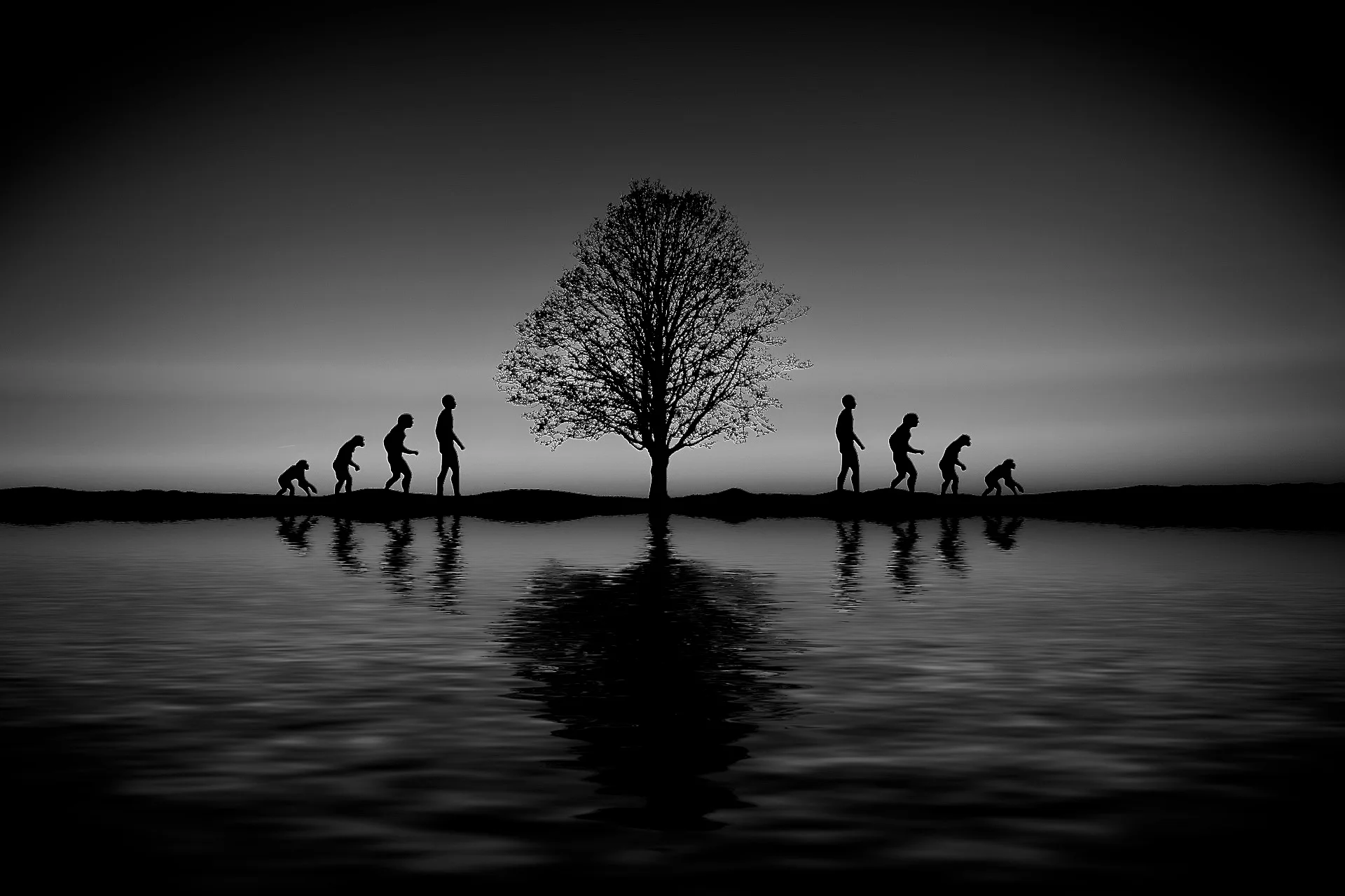
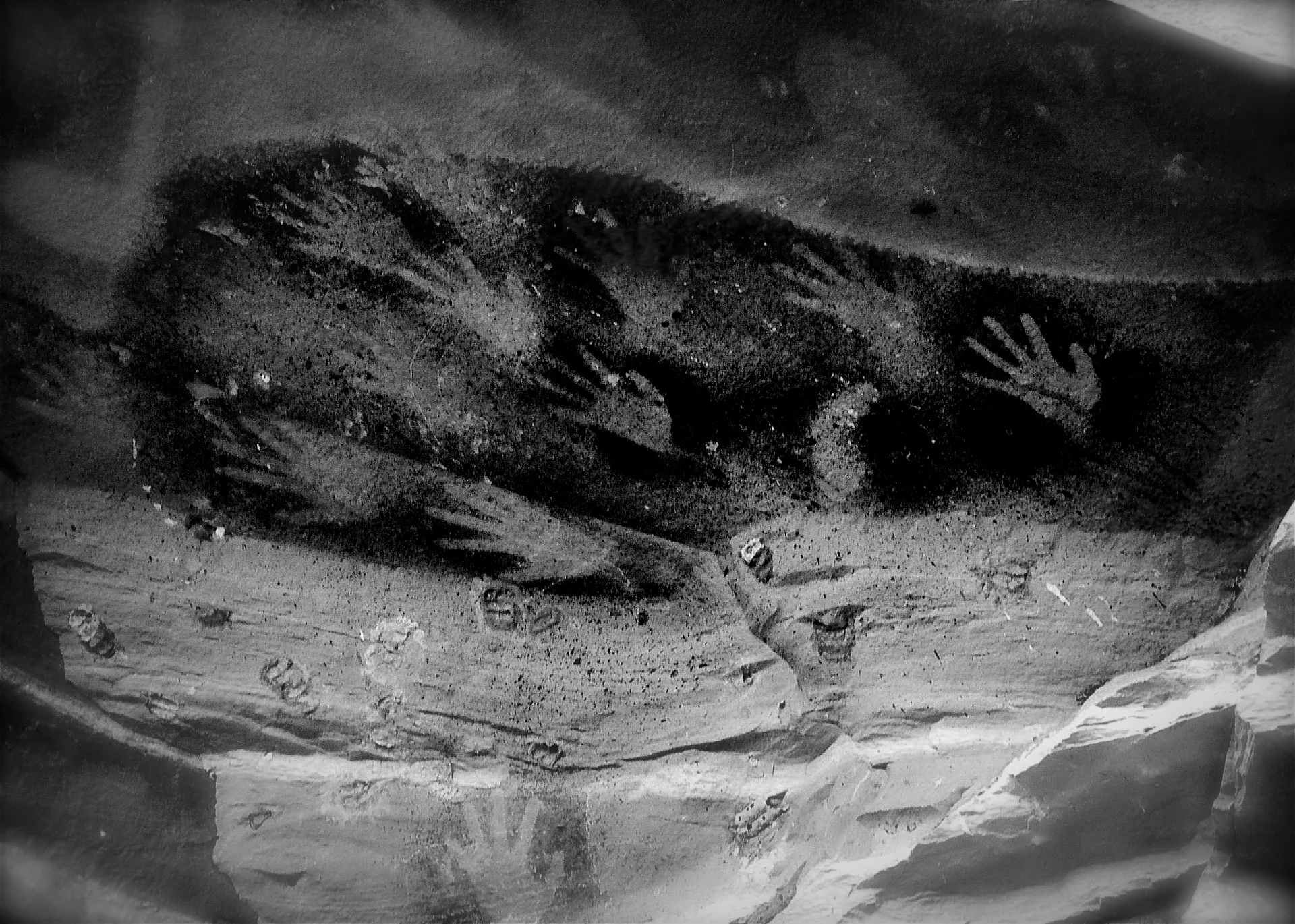
6 Theories That Explain How We Became Human

August 07, 2019
“Science knows no country, because knowledge belongs to humanity, and is the torch which illuminates the world.”
— Louis Pasteur

A spate of recent discoveries in genome research and the evolution of early humankind has prompted a radical rethink about our origins, everything from the discovery of a skull in Greece thought to be 210,000 years old — suggesting that modern humans reached Europe 150,000 years earlier than first thought — to the discovery of the remains of a previously unknown human cousin, Homo naledi, in a cave in South Africa.

New discoveries aside, some theories that purport  to explain how we became human have stood the test of time — so far.

We manufacture tools.

“The manufacture of tools is a particularity of man,” the anthropologist Kenneth Oakley wrote in 1944. Apes use the objects they find, too, but “modelling sticks and stones for a specific use was the first recognized … activity” of human thinking.

In the early 1960s, the palaeontologist Louis Leakey attributed the origins of toolmaking — and by inference, humankind — to an early ancestor of humans he named Homo habilis (Skillful Man) who lived in East Africa about 2.8 million years ago.

Primatologist Jane Goodall would later observe that chimpanzees also modify branches or trees, to use to dig insects out of the ground with, which suggests that toolmaking may in fact predate human evolution.

Even so, the ability to modify existing tools and make new ones is still considered to be one of the signatures of human thought.

We are murderers, and yet we share food.

The anthropologist Raymond Dart hypothesized that our ancestors differed from apes in that they were assassins who killed their own, for profit and for greed.

This thinking of the 1950s shifted somewhat in the 1960s, when the anthropologist Glynn Isaac proved, using unearthed evidence of animal carcasses, that freshly killed food was deliberately moved from where it died to place where the entire community could share in the meal.

We cast stones.

The archaeologist Reid Ferring posits that early humans “began to humanize” when they developed the ability to throw rocks with great speed and accuracy.

Ferring uncovered evidence at a 1.8 million-year-old site in Dmanisi, Georgia that suggested Homo erectus honed their stoning efforts to scare away bigger, stronger scavengers that threatened to steal their food.

“The (people) of Dmanisi were small,” Ferring explains. “The area was full of big cats. How were the hominins going to survive?”

Interestingly, anthropologists have since agued that “public stoning” contributed to socialization, because to be successful, the strategy required group effort.

We cook food.

The bigger the brain, the more energy it requires to thrive. Grey matter demands 20 times more energy than muscle.

Researchers now believe the human brain would never have evolved with a strictly vegan diet. Our brains grew in size two- to three million years ago, as our early ancestors began to consume meat, a source rich in protein and fat.

Anthropologist Richard Wrangham advanced that theory by noting that cooking food — an “exclusively human behaviour” — requires less energy to chew or pound meat and facilitates the digestion of food, which in turn sets aside more energy for use of the brain.

“In the long run, those brains developed enough to make the conscious decision to become vegetarians.”

The circle of life, you might say.

We walk on two feet.

Many anthropologists believe “the point of inflection” at which apes became human was when our ancestors came down from the trees and started to walk upright.

Interestingly, given the events of recent times, many proponents of the so-called “savannah hypothesis,” believe the move could have been triggered by climate change.

As Africa, once a green biome of tropical forests and inland seas,  began to dry out and become predominantly grasslands, around three million years ago, survival favoured those who could see and move about on flat terrain, where water and food were only to be found in secluded places.

Survival of the fittest = adaptability.

There’s a growing belief, shared by Richard Potts, director of the Smithsonian’s Human Origins Program, among others, that several changes in climate influenced human evolution, rather than a single event.

The emergence of Homo lineage, three million years ago, coincided with dramatic fluctuations between humid and dry climates. Natural selection favoured primates that could face constant and unpredictable changes.

Adaptability is one of the defining character markers of human beings, and is the reason humans have survived — so far — where countless other species have perished.

Of course, all that was then, this is now. And the future may look very different.

©Siggy Nowak-Pixabay

©Siggy Nowak-Pixabay


Tags: Homo naledi, genome research, palaeontology, early humans, human evolution, anthropology, Kenneth Oakley, Louis Leakey, Jane Goodall, Homo habilis, Skillful Man, Raymond Dart, Glynn Isaac, Reid Ferring, Dmanisi, Homo erectus, Richard Wrangham, Louis Pasteur, savannah hypothesis, Richard Potts, Smithsonian, Human Origins Program
©Sharon Ang-Pixabay

©Sharon Ang-Pixabay

Google Camp: Une périod de grande chaleur for ‘Eco-Celebs’

August 05, 2019
“Note to Silicon Valley: If you want to throw grotesquely smug A-list beanos, spare us the ghastly faux-worthiness.”
— Barbara Ellen, The Guardian

It doesn’t get more hypocritical than A-listers jetting in on private planes to kvetch about climate change at a private party in Sicily organized by Google, the Divine Miss (Miranda) Devine opined in a column this past week for the New York Post.

“The Gulfstreams, mega-yachts and gas-guzzling Maserati SUVs used to ferry to wokerati around the seaside Google Camp have been spewing out greenhouse gases at the rate of small nations.”

Like so many inconvenient truths, this one happens to be true.

One observer counted no fewer than 114 private planes at Google founders Sergey Brin and Larry Page’s 300- invited-guest shindig dubbed “Davos by the Sea,” where Prince Harry and Bill Gates rubbed tuxedo-clad shoulders with the likes of Leonardo DiCaprio, Coldplay’s Chris Martin and pop star Katy Perry.

The optics were terrible, which is odd considering that so many of the entertainment eco-celebs present earn their living through their public image. 

While it’s true that media tycoon Rupert Murdoch — owner of the Post — and the media barons behind the UK Daily Mail and Daily Telegraph, both of which published angry screeds about the awful, awful hypocrisy of it all, have an anti-climate, pro-Big Oil bias, it’s also true that they have a point. 

After all, celebrities are in no position to lecture ordinary, everyday working people about being responsible caretakers of the environment when a private yacht burns more than 300 gallons of diesel an hour, just one Gulfstream spews tons of CO2 into the atmosphere on a single, short-haul flight, and megawatts of power are required to drive the sound system at the dusk concert among the ruins of the seaside Temple of Hera.

Presumably the celebs didn’t dine on Chilean sea bass at their candlelight banquet, but one never knows with these things.

The Divine Miss Devine noted that the Verdura resort on Sicily’s southwest coast, host of the event, has won a sustainability award, despite three water-guzzling golf courses (ecologists and conservationists will tell you there are few man-made things on the planet more destructive than a golf course) and a 60-metre “infinity pool,” not to mention a small city’s worth of outdoor therapy pools, steam baths, saunas, plunge pools and, get this, a private beach made of sand not from southwestern Sicily but rather flown in and/or trucked in, using yet more fossil fuels.

Prince Harry gave a “barefoot speech” to the assembled glitterati, prompting Miss Devine to remark that it doesn’t get much sillier than being

lectured about carbon footprints by a prince whose blue-blooded family swans around their island kingdom in numerous palaces and royal estates.

As the world’s right-wing media lined up to take swings at eco-celebs with more money — literally — than they know what to do with, it was probably inevitable that some in the Murdoch media mob would unload on Swedish teen climate activist Greta Thunberg, who recently accepted an invitation to speak about the climate crisis next month before the United Nations in New York — but only after accepting Prince Albert of Monaco’s offer of his racing yacht to cross the Atlantic on wind power. Thunberg has pointedly — and publicly — refused to fly, to show her commitment to cutting her own carbon emissions.

Her accepting Prince Albert’s offer opened her to ridicule, some of it vicious, from media hacks beholden to the fossil fuel industry. News Corp Australia columnist Andrew Bolt, a noted climate denier who writes for the Melbourne-based, Murdoch-owned Herald Sun, described Thunberg as “deeply disturbed,” “strange” and “freakishly influential,” and likened her followers to the members of a cult — Stockholm syndrome by way of a wind-powered racing yacht. “I have never seen a girl so young and with so many mental disorders treated by so many adults as a guru,” Bolt wrote. “Far more interesting is why so many adults — including elected politicians, business leaders, the Pope and journalists — treat a young and strange girl with such awe and even rapture. Her intense fear of the climate is not surprising from someone with disorders which intensify fears.”

It’s one thing to ridicule Bono and Bradley Cooper, but quite another to ridicule a teenage girl who, just a year ago, was unknown outside the circle of her friends and family.

A teenage girl who can fight back, too.

And fight back she did.

She hit back over the weekend on Twitter, called out the “hate and conspiracy campaigns” of media carpers like Bolt, and owned his insult by turning it back on him. Her Asperger’s syndrome, she said, is not a disability but a gift that has helped open her eyes to the climate crisis — and given her the courage to take on the deniers out loud.

The Google Camp was indeed tone deaf, and made for terrible optics.

It would be a mistake, though, for the climate deniers to assume a 16-year-old soothsayer from Sweden will prove as willing a target when she takes the lectern next month at the United Nations.

©Frederick Florin/AFP/Getty Images

©Frederick Florin/AFP/Getty Images


Tags: Google Camp, Verdura resort, Sicily, eco-celebrities, Miranda Devine, New York Post, Barbara Ellen, The Guardian, beanos, Sergey Brin, Larry Page, Davos by the Sea, Prince Harry, Prince Albert, Saxe-Coburg, Bill Gates, Leonardo DiCaprio, Katy Perry, Coldplay, Chris Martin, Rupert Murdoch, Daily Telegraph, Big Oil, CO2, carbon emissions, carbon footprint, climate crisis, Greta Thunberg, United Nations, UN General Assembly, News Corp Australia, Melbourne Herald-Sun, Andrew Bolt, Stockholm syndrome, Asberger, Asberger's, Bono, Bradley Cooper, Twitter
©Marcel Langthim-Pixabay

©Marcel Langthim-Pixabay

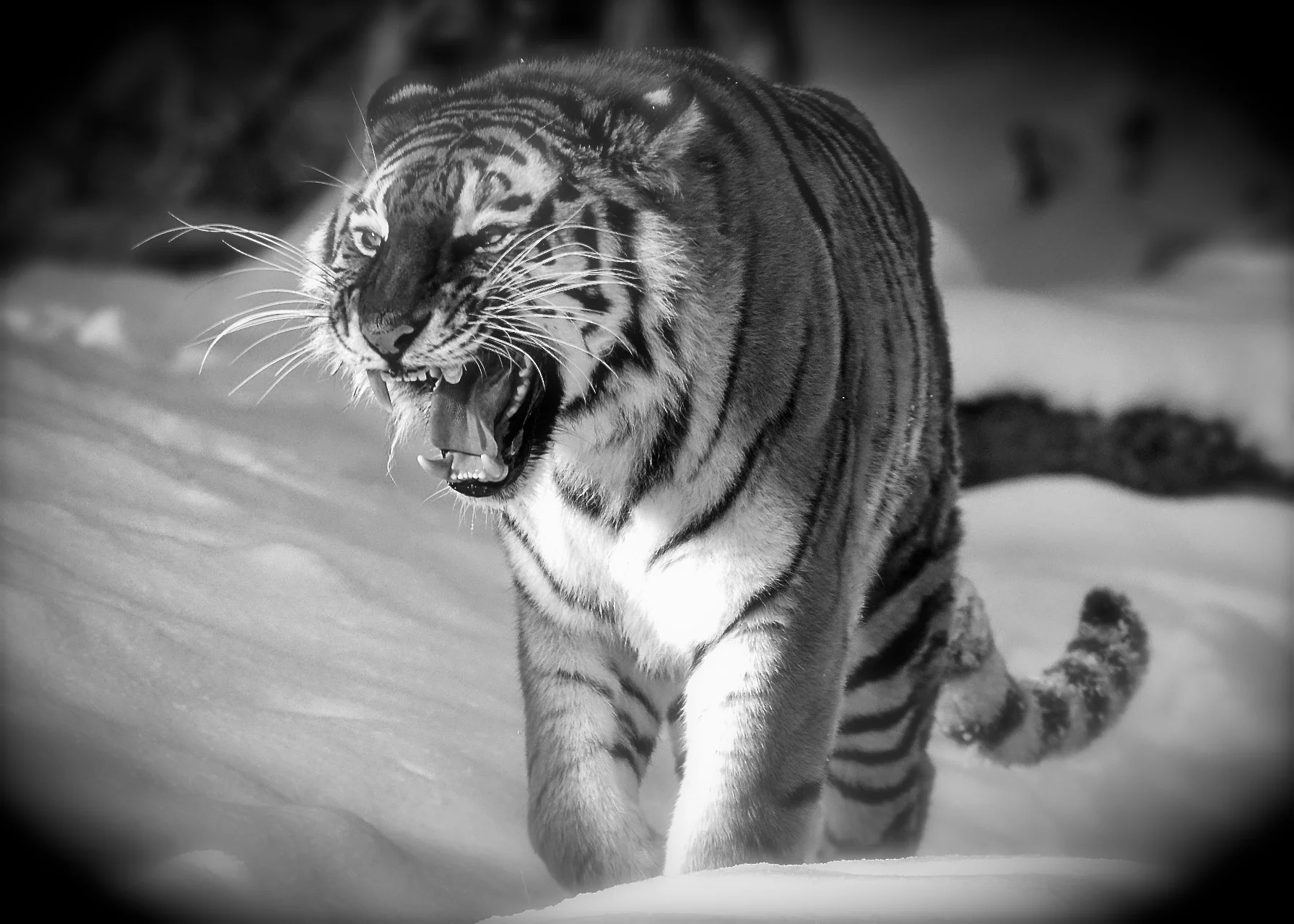
Counting Tigers Not Like Counting Crows

July 31, 2019
“Tiger! Tiger! What of the hunting, hunter bold? Brother, the watch was long and cold. What of the quarry ye went to kill? Brother, he crops in the jungle still. Where is the power that made your pride? Brother, it ebbs from my flank and side. Where is the haste that ye hurry by? Brother, I go to my lair— to die. ”
— Rudyard Kipling, The Jungle Book

Even a glimmer of positive news is enough to get the heart racing these days.

Word that tiger populations in India have grown by a third in recent years was greeted with understandable enthusiasm in the mainstream press, with BBC World News among the respected media outlets that gave the story prominent play this past week.

And why not? This wasn’t the work of some bunny-hugging conservation NGO, after all, with a feel-good agenda to push. This was an official tiger census by the government of India, conducted over a four-year period and involving the latest in camera and GPS tracking technology.

We’re living in a post-facts world, though, where low-information voters have decided referendums and presidential elections in any number across the developed world. Healthy skepticism is warranted. Not cynicism exactly, but a questioning attitude. By now we’ve learned that, even when verifiable facts are involved, not everything is as it seems. Spin is everything. It’s  not the story that matters anymore but how it’s presented that counts.

First the facts, as reported by BBC and others. India is now home to 3,000 tigers, roughly a third more than it had just four years ago, according to the latest tiger census there. Indian Prime Minister Narendra Modi presented the findings on Monday. Tiger populations in India increased in 2018 to 2,967 from 2,226 in 2014, Modi told reporters. India is “now one of the biggest and most secure habitats of the tiger,” he said.

India is home to around 70% of the world’s remaining wild tigers.

Much of this is verifiably true. India is home to most of the world’s surviving tigers — no news flash there — and it home to the world’s most famous tiger parks, from Ranthambore National Park in Rajasthan, a few hours’ drive south of Delhi, to Bandhavgarh National Park in central India, in the state of Madhya Pradesh. All true.

Field biologists — and anyone who knows the nitty gritty of wildlife censuses — were immediately taken aback by the specificity of the census’ estimates of tiger numbers, though. Counting wild animals is a tricky business at the best of times. Even herd animals, such as elephants, range over vast territories, and it can be easy to count the same animal twice. Big cats, especially those, like tigers, that hide in deep forest canopies, are not that easy to spot, let alone identify, and are impossible to spot from the air. 

(Most elephant counts are conducted from light planes, often over flat savannahs where it’s possible to take in the wide view. Even at that, some field biologists will tell you that elephant counts are not always 100% reliable, the most recent controversy being in Botswana, on the heels of that country’s decision to lift its hunting ban.)

Field biologists and conservationists will also tell you that the biggest crisis facing India’s tigers is not the numbers  — 3,000, while sounding like a lot, is a small fraction of the 40,000 tigers that roamed India at independence, and a tiny fraction of the 100,000 tigers that roamed India in 1900 — but rather shrinking habitat, the constant encroachment of surrounding farms and mining on protected land and the painful reality that India is increasingly a dry, overcrowded subcontinent with a handful of tiny green islands or “hotspots,” surrounded by a sea of humanity and parched fields. The climate crisis isn’t helping.

Tigers need vast territories not just to hunt but to find mates, raise cubs of their own and maintain the integrity of a shrinking gene pool.

It’s worth noting, too, that Modi, like many national leaders, is well aware that a feel-good conservation story, especially one involving a charismatic, iconic species like the tiger, plays well to a jaded public increasingly restive over other issues, like running water and reliable electricity.

Another issue is human-wildlife conflict. Too many tigers in a confined space will inevitably drive some tigers outside protected areas, in order to hunt and find food. Conflict with subsistence farmers and cattle herders is inevitable, especially when those farmers are living a precarious existence as it is.

“It would be awesome if the reports were true,” a friend told me, yesterday. “But there’s a lot of healthy skepticism. I don’t think they inflated the 30%.  But I believe (wildlife biologist and tiger specialist K. Ullas) Karanth and others are right in that the census methods need to be improved to really get an accurate count. . . . Sadly, at this point, even if the report is accurate, the protected habitats will have to be enlarged if there is to be more population growth.”

https://www.bbc.com/news/world-asia-india-49148174

https://www.hindustantimes.com/india-news/70-of-wild-tigers-in-the-world-are-in-india-report/story-Z56iHbdDxHnmOV2n4YoYLO.html


Tags: tiger populations, tiger census, All India Tiger Estimation 2018, K. Ullas Karanth, Bandhavgarh National Park, Ranthambore National Park, BBC World news, Narendra Modi, Hindustan Times, human wildlife conflict, post-facts world, low-information voters, hotspots, green islands
©Gerd Altmann-Pixabay

©Gerd Altmann-Pixabay

La canicule = Paris brûle

July 27, 2019
“We have to acknowledge that the older generations have failed. All political movements in their present form have failed. But home sapiens have not yet failed. Yes, we are failing, but there is still time to turn everything around.”
— Greta Thunberg, voiceover on the music track ‘The 1975,’ by the Manchester band, The 1975.

First the numbers. Then the rallying cry.

All-time temperature records tumbled — again — this past week as the second heatwave in as many months seared Europe. Germany, Holland and Belgium recorded national temperature highs for two days running, and Paris recorded its hottest temperature since records have been kept. A similar heatwave last month made that the hottest June on record. Wednesday’s Dutch record of 39.3°C (102.7°F) was set in Eindhoven; Belgium’s record of 40.6°C was set at Kleine Brogel, near the Dutch border, the following day.

Scientists say the climate crisis is making summer heatwaves five times more likely and significantly more intense. So much for the old, increasingly tired argument that there’s no correlation between weather and climate.

Now the rallying cry. Yes, that was voice of climate activist Greta Thunberg on the title track of the Manchester rock group The 1975’s forthcoming album, which previewed last week — the same day Thunberg addressed legislators at France’s National Assembly, at which she urged them to “unite behind the science.”

French right-wingers, including but not limited to ideological followers of France’s neo-Nazi wing, refused to attend her appearance, proving yet again that nothing terrifies the monied interests of Big Oil and skinheads with bike chains than a slight, soft-spoken, 16-year-old climate activist.

Thunberg said young climate activists have become the bad guys — her words — for stating uncomfortable truths.

“Just for quoting or acting on these numbers, these scientific facts, we receive unimaginable amounts of hate and threats,” she said. “We are being mocked and lied about by members of parliament and journalists.”

Well, not proper journalists, one would like to think — at least, those journalists who haven’t forgotten the meaning of the word.

Thunberg’s speeches — which she writes herself, not having the financial backing or wherewithal of Big Oil’s cadre of climate deniers — tend to be terse and to-the-point, marked by short sentences and staccato salvos, not unlike burst poetry.

Here then, without further ado, is what she told French legislators, verbatim.


We are right now in the beginning of a climate and ecological crisis.

And we need to call it what it is. An emergency.

We must acknowledge that we do not have the situation under control and that we donʼt have all the solutions yet. Unless those solutions mean that we simply stop doing certain things.

We admit that we are losing this battle.

We have to acknowledge that the older generations have failed. All political movements in their present form have failed.

But homo sapiens have not yet failed.

Yes, we are failing, but there is still time to turn everything around. We can still fix this. We still have everything in our own hands. 

But unless we recognize the overall failures of our current systems, we most probably donʼt stand a chance. 

We are facing a disaster of unspoken sufferings for enormous amounts of people. And now is not the time for speaking politely or focusing on what we can or cannot say. Now is the time to speak clearly. 

Solving the climate crisis is the greatest and most complex challenge that homo sapiens have ever faced. The main solution, however, is so simple that even a small child can understand it. We have to stop our emissions of greenhouse gases. 

And either we do that, or we donʼt. 

You say that nothing in life is black or white. 

But that is a lie. A very dangerous lie. 

Either we prevent a 1.5 degree of warming, or we donʼt. 

Either we avoid setting off that irreversible chain reaction beyond human control, or we donʼt. 

Either we choose to go on as a civilization or we donʼt. That is as black or white as it gets.

Because there are no grey areas when it comes to survival. Now we all have a choice. 

We can create transformational action that will safeguard the living conditions for future generations.

Or we can continue with our business as usual and fail.

That is up to you and me.

And yes, we need a system change rather than individual change. But you cannot have one without the other.

If you look through history, all the big changes in society have been started by people at the grassroots level. People like you and me.

So, I ask you to please wake up and make the changes required possible. To do your best is no longer good enough. We must all do the seemingly impossible.

Today, we use about 100 million barrels of oil every single day. There are no politics to change that. There are no rules to keep that oil in the ground.

So, we can no longer save the world by playing by the rules. Because the rules have to be changed.

Everything needs to change. And it has to start today.

So, everyone out there, it is now time for civil disobedience. It is time to rebel.

Paris did eventually break its heat record, by the way. The City of Light registered a high of 42.6° C (108.7°), on Thursday. Numbers don’t lie.

©assemble-nationale.fr

©assemble-nationale.fr


Tags: heatwave, heat records, record temperatures, climate crisis, climate emergency, Greta Thunberg, National Assembly, France, The 1975, Eindhoven, Kleine Brogel, climate deniers, Paris, City of Light
Prev / Next

Journal

“Man is modifying the world so fast and so drastically that most animals cannot adapt to the new conditions. In the Himalaya as elsewhere there is a great dying, one infinitely sadder than the Pleistocene extinctions, for man now has the knowledge and the need to save the remnants of his past.”

— Peter Matthiessen


Featured Posts

Featured
1.bourdain hong kong.jpg.png
Aug 19, 2025
Bourdain in Hong Kong
Aug 19, 2025
Aug 19, 2025
1.ABPU_S11_Armenia3.jpg.png
Jul 21, 2025
Bourdain in Armenia
Jul 21, 2025
Jul 21, 2025
art1.jpg.png
Jun 25, 2025
Bourdain in Uruguay
Jun 25, 2025
Jun 25, 2025
1.bourdain congo2.jpg.png
Jun 8, 2025
8 June — Bourdain Remembered
Jun 8, 2025
Jun 8, 2025
1.Screen Shot 2025-05-27 at 5.41.13 AM.jpg.png
May 31, 2025
Bourdain in Southern Italy (with Francis Ford Coppola)
May 31, 2025
May 31, 2025
8.dsc09592.jpg.png
May 17, 2025
Bourdain in Puerto Rico
May 17, 2025
May 17, 2025
9.11216842-anthonybourdain-srilankajpg-c-web.jpg.png
May 4, 2025
Bourdain in Sri Lanka
May 4, 2025
May 4, 2025
b.art1.png
Apr 17, 2025
Bourdain in Lagos, Nigeria
Apr 17, 2025
Apr 17, 2025
1.art website.jpg.png
Apr 10, 2025
Bourdain in the French Alps (avec Eric Ripert)
Apr 10, 2025
Apr 10, 2025
1.art (2).jpg.png
Apr 2, 2025
Bourdain in Singapore
Apr 2, 2025
Apr 2, 2025