
• Entr'acte
  • Living Landscapes
  • Dispatches
  • Natural History
  • Panthera
  • Elephantidae
  • Bibliothèque
  • About
  • Menu

Strachan Photography

  • Entr'acte
  • Living Landscapes
  • Dispatches
  • Natural History
  • Panthera
  • Elephantidae
  • Bibliothèque
  • About
©Rice University

©Rice University

Iceland No Longer All That

July 24, 2019
“This monument is to acknowledge that we know what is happening and what needs to be done. Only you know if we did it.”
— Memorial plaque to be unveiled next month at Iceland’s Okjökull glacier

Iceland has lost its first glacier to global heating, but the small island nation is not about to let that pass unrecorded. A plaque to be installed next month at what remains of Okjökull glacier will tell future generations that all 400 of Iceland’s glaciers will meet the same fate, during the next 200 years, unless humanity found a way to reverse the effects of our growing climate crisis.

The plaque, in English and Icelandic, is titled, “A letter to the future.” Iceland is justifiably proud of its moniker “Land of Fire and Ice,” as immortalized in its other-worldly landscapes of volcanoes and glacier.

“This will be the first monument to a glacier lost to climate change anywhere in the world,” Rice University (Houston) anthropologist Cymene Howe told the news agency Reuters earlier this week. Howe and her fellow Rice researcher Dominic Boyer made a documentary film last year about Ok glacier’s, as it’s widely known, vanishing act.

“By marking Ok’s passing, we hope to draw attention to what is being lost as Earth’s glaciers expire.”

Howe and Boyer made the documentary Not Ok last year, to show how the climate emergency is already affecting ordinary people’s lives.

Shrinking glaciers have already caused profound shifts in weather patterns across the world, and not just because the Icelandic Meteorological Office says so. Even the jet-stream has been disrupted, leading to wild temperature swings this summer across both Europe and North America.

Howe’s statement, as reported by Reuters, may sound dry, as press statements tend to do, but it bears paying attention to, just the same.

“With this memorial, we want to underscore that it is up to us, the living, to collectively respond to the rapid loss of glaciers and the ongoing impacts of climate change.”

Save it or lose it, in other words.

Teen activist Greta Thunberg has done her part,

lord knows, but is really down to a 16-year-old to save the planet?

Just a century ago, as the guns of August were finally growing silent following the end of the First World War, Okjökull glacier covered some 15 sq km (6 square miles) of mountainous terrain in western Iceland. The ice was 15 metres (165 ft) thick. Today Ok-Not-Ok has shrunk to barely 1 sq km of ice, and is less than 15 metres (50 ft) deep. It has lost its official status a glacier, as a result.

A glacier is officially defined as a persistent mass of compacted ice that accumulates more mass each winter than it loses through summer. Glaciers move because they shift quite literally under the force of their own weight. When this stops, the remains are known as “dead ice.”

Rice University researchers, Icelandic novelist Andri Snær Magnason and geologist Oddur Sigurõsson will unveil the plaque on Aug. 18. 

The plaque will include the words 415ppm CO², a reference to the record-breaking level of 415 parts-per-million of carbon dioxide recorded in the atmosphere this past May.

The far north has been warming twice as fast as the rest or the planet, owing to physical forces that climate deniers are unlikely — or unwilling — to understand. This past June was the warmest ever recorded.

While it’s clever — if a bit precious — to point out that there have been epochs in geological time when the Earth was much warmer than it is today, that’s a specious argument. We’re living in the Anthropocene era, loosely defined as the period of time human beings have been on the planet. 

If the entire history of planet Earth is recorded as a 24-hour clock, humans first emerged at 11:58:43 pm. Plants on land, for what it’s worth, first emerged at 9:52pm. The idea that a glacier as large as Okjökull can vanish in a mere 100 years should alarm everyone, even a dyed-in-the-wool climate denier.

©Screen Shot 2019-07-24 at 10.12.17 AM.jpg


Tags: Okjökull, Ok glacier, Not Ok, Cymene Howe, Reuters, Dominic Boyer, Rice University (Houston), 24-hour geological clock, Anthropocene, Andri Snær Magnason, Oddur Sigurõsson, Iceland, ice melt, global heating, climate emergency, climate deniers, Greta Thunberg, Land of Fire and Ice, Letter to the future
©Michael Campanella-The Guardian

©Michael Campanella-The Guardian

The Day Greta Thunberg Took On a Climate Cynic

July 22, 2019
“I don’t care about age. Nor do I care about those who do not accept the science. I don’t have as much experience, and therefore I listen more. But I also have the right to express my opinion, no matter my age. Also, being young is a great advantage, since we see the world from a new perspective and we are not afraid to make radical changes.”
— Greta Thunberg

“Today I choose life,” the late American writer and photographer Kevyn Aucoin once said. “Every morning, when I wake up, I can choose joy, happiness, negativity, pain. To feel the freedom that comes from being able to continue to make mistakes and choices, today I choose to to feel life. Not to deny my humanity, but to embrace it.”

Aucoin died in 2002 from complications from a rare pituitary tumour. He had suffered from acromegaly and its accompanying pain for much of his life, but the tumour had gone undiagnosed.

I couldn’t help but think of those words — “not to deny my humanity,  but to embrace it” — as I read a remarkable Q-&-A with-a-difference in Sunday’s UK Observer with teen activist Greta Thunberg.

Thunberg is everywhere these days, it seems, despite being a virtual unknown to the outside world just a year ago. This time last year, Scottish-born playwright, novelist and Sunday Observer columnist Ali Smith wrote, “she was unimaginable. Then, pretty much from nowhere, there she was” small and slight, a girl just turned 16, the way-too-young odd person out on a panel of adults sitting in front of the world’s economic powers at Davos, in January. Unshowy and serious, careful, firm, she said it: Our house is on fire.”

Q-&-A articles are a dime-a-dozen these days. Just two weeks earlier, in the same newspaper, the Guardian and Sunday Observer arranged a get-to-know-you conference call between Thunberg, in Stockholm (she doesn’t fly, in order to her part in combatting carbon emissions), and Green New Deal architect and Democrat activist unlikeAlexandria Ocasio-Cortez, in Washington, DC. The 16-year-old and the 29-year-old, linked by present-day wireless satellite technology and doing their part to save the planet’s fragile, increasingly threatened ecosystem. If this is to be the future of the war on our growing climate crisis, it has a distinctively young face.

It was a lively conversation, high in energy and ideas, and spiritually affirming. 

This past weekend, the Sunday Observer took it up a level, encouraging celebrities and ordinary, everyday readers to ask Thunberg whatever they wanted. From Game of Thrones actor Maisie Williams, who virtually grew up on-camera — she

was 14 when Game of Thrones began and 22 when it ended — and UK Labour leader Jeremy Corbyn, to primatologist Jane Goodall, they did just that.

What was truly remarkable in Thunberg’s answers was how concise, clear-headed and conscientious her answers were. Her words were honest, unguarded and obviously unrehearsed. These were words spoken in the moment, from the heart, and not once was there a hint of handlers, minders and public-relations experts in her answers.

I’ve included a link here, and the whole thing is worth reading, not just because of her youthful age but because there are some genuine ideas here. 

https://www.theguardian.com/culture/2019/jul/21/great-thunberg-you-ask-the-questions-see-us-as-a-threat

Thunberg is bold and fearless, and utterly committed to the cause — and yet, oddly open. Nothing about her grates. She’s serious, but not a scold. The climate emergency is a real, genuine crisis, and yet Thunberg is clearly ready for what will be a nasty, protracted, bitter fight against the combined power and vested interests of Big Oil, Big Pharma and Big Brother. “Hers is a voice totally unlike the world’s usual power-cacophony,” Smith wrote in her Observer preamble, clean, simple, inclusive. She cuts through the media white noise and political rabble-rousing to get to the essentials . . .This is a communal voice . . . (with) transformatory impact and consequences.”

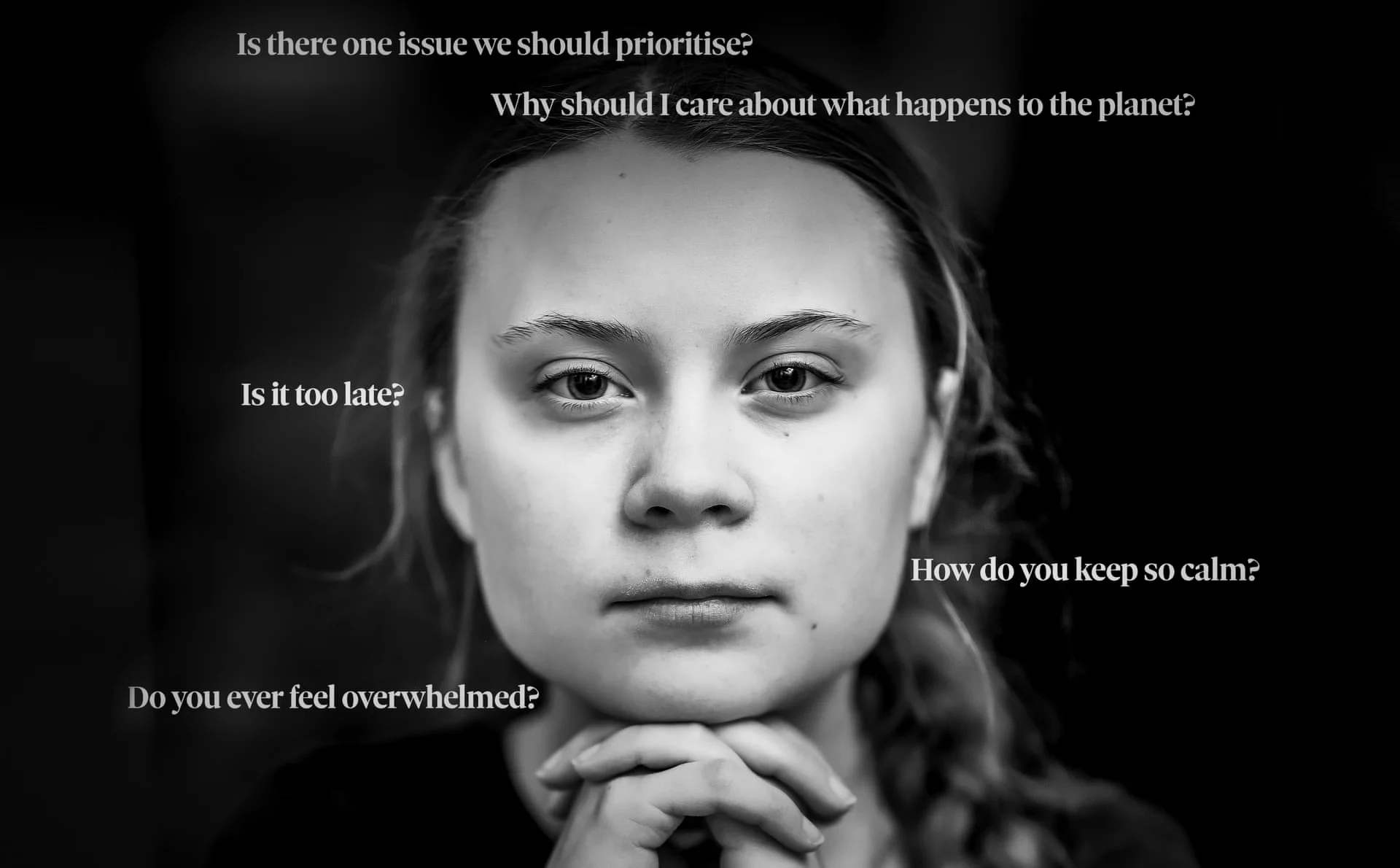
Of all the questions that struck me, it was one from a regular reader — anonymous, posed online — that hit home, for me. It wasn’t so much the question, though many, probably too many, are asking it, as it was Thunberg answer.

It was the clarity and maturity of that answer, again unrehearsed and uncoached, that struck a chord deep within me.

I am an old man without children, the comment read. Why should I care about what happens to the planet after my death?

“Maybe you believe in something?” was Thunberg’s reply. “Like karma, faith? Or morality? Or just because it’s the right thing to do.”

Just — because.

©Goran Horvat-Pixabay

©Goran Horvat-Pixabay

Tags: Greta Thunberg, Sunday Observer, Ali Smith, The Guardian, Kevyn Aucoin, climate emergency, Maisie Williams, Jeremy Corbyn, Jane Goodall, Game of Thrones, Alexandria Ocasio-Cortez, AOC, Big Oil, Davos, piuitary tumour, acromegaly
©WikiImages-NASA

©WikiImages-NASA

Dishing up Apollo 11 and 'The Dish'

July 19, 2019
“To see the Earth as it truly is, small and blue and beautiful in that eternal silence where it floats, is to see ourselves as riders on the Earth together, brothers on that bright loveliness in the eternal cold — brothers who know now they are truly brothers.”
— Archibald MacLeish

More than 600 million people watched in July, 1969 when Neil Armstrong took his famous small step for man and giant leap for mankind. 

That anyone was able to watch, let alone hundreds of thousands of people around the world who happened to be near a TV that eventful day, was thanks largely to an outpost in rural Australia.

Those momentous events in the sky have been burned in the collective memory in the 50 years since. The somewhat less eventful moments on the ground were dramatized in an 2000 Australian film The Dish, which, while fondly remembered by some, hardly set the world on fire.

Watching it today, though, in the media frenzy surrounding the Apollo 11 anniversary, it’s hard not to feel at least a twinge of nostalgia. It’s to be reminded of a kinder, gentler time, when a previously thought-to-be-unthinkable achievement in science and engineering could help lift the collective human spirit. 

“I helped the world watch the Moon landing,” radio receiver engineer David Cooke, the man who helped get those famous images on to TV sets around the world, told BBC’s World Service earlier this week, on the eve of the Apollo moon landing’s  50th anniversary loomed.

Curiously, Cooke’s role was omitted from The Dish; the film’s central character Cliff Buxton, played by New Zealand actor Sam Neill,  was a fictional character, nicknamed “The Dishmaster,” the radio satellite dish’s chief engineer. Like much of the film, much of what the Dishmaster did and did not do was made up — if not Hollywood, exactly, an Aussie version of Hollywood.

The somewhat fictionalized story of the Parkes Observatory’s role in relaying live television of man’s first steps on the moon during the Apollo mission in 1969 is still compelling, though, in reminding us of a time when digital technology and social media didn’t connect the world in nanoseconds, for better and for worse. 

The radio telescope outside the town of Parkes, pop. 15,000, in Australia’s New South Wales still stands to this day. Telescope technology has advanced since the late 1960s, but even these

aging radio observatories serve a useful purpose, when they’re in remote places where the skies remain free of carbon emissions and the ambient light of civilization.

Today, TV signals are relayed by satellites — where TV remains at all. The wired, connected world is shifting online, where it may soon be possible to view the lunar surface in real time, round the clock, night and day. It’s only a matter of time before science places a live camera on the moon, so everyone with a screen  

As the late American poet Archibald MacLeish wrote in 1968, when the first orbital view of our blue planet was photographed from the vantage point of the moon as a small blue dot, thanks to Apollo 8 — the first manned spacecraft to reach the moon and circle it, without landing — “To see the Earth as it truly is, small and blue and beautiful in that eternal silence where it floats, is to see ourselves as riders on the Earth together, brothers on that bright loveliness in the eternal cold — brothers who know now they are truly brothers.”

A little purple, perhaps, especially when viewed in the cynicism of our age.

The Dish, fictionalized though it may have been, took a more working class view.

“This is a chance for science to be daring,” Neill’s character Cliff Buxton says in the film.

Later, when a cyclone — a sudden windstorm in real life, but exaggerated for dramatic effect  — threatens to wreak havoc with the radio telescope’s critical transmission, Buxton gives it the old Aussie.

“We sit here on our arses for five bloody days. Not a breath of bloody wind. Then, on cue, out of nowhere, just when it’s our turn, a bloody cyclone decides to park its arse on us. Um . . . I’m sorry, lads. I just might go check some bloody thing.”

Not poetry, perhaps, but it fits the tone of the times. The Apollo moon landing marked a turning point in human history, either way.

https://www.theguardian.com/film/features/featurepages/0,,496701,00.html

©WikiImages-NASA

©WikiImages-NASA

https://www.bbc.com/news/av/world-australia-49029605/apollo-11-i-helped-the-world-watch-moon-landing


Tags: Apollo 11, 50th anniversary, moon landing, one small step for man, Neil Armstrong, Archibald MacLeish, Parkes Observatory, New South Wales, The Dish, Cliff Buxton, David Cooke, Sam Neill, The Dishmaster, BBC World Service, dramatic effect
©Alex Strachan

©Alex Strachan

How To Become a Real-Life Lion King

July 17, 2019
“Firstly — and this is a tricky one — try to be born in one of just a handful of places that have full protection for lions. Today, over 60% of lions live in non-protected areas. With only 20,000 lions left in Africa, that means only about 8,000 lions are really secure.”
— Beverly Joubert

How do you become a #RealLifeLionKing, field researcher, wildlife filmmaker and National Geographic Explorer-in-Residence Beverly Joubert asked the other day, on her Facebook page.

As might be expected, the truth is both more interesting — and yet similar in a lot of ways — than any Disney movie.

Be nice to your brothers, Joubert counsels. “We know they are irritating and it’s the best fun to pull their tails and toss them off their castle-like termite mounds, but male lions that have a coalition with their brothers win fights.”

Joubert, who’s earned her stripes — literally; she was nailed by a buffalo and almost gored to death two years ago in Botswana’s Okavango Delta, where she and her filmmaker life-partner Dereck Joubert have made their home for the past 25 years — cites studies that show that when two lion kings are confronted by four or more would-be young usurpers to the throne, the younger lions often win, even though they may lack the individual strength, wisdom, knowledge and life experience of the older lions.

A real life lion king knows how to find the shade. Male lions, kings, princes and challengers to the throne alike have large manes — much larger than the Asiatic lions — and if they could sweat (they can’t) they’d be dripping wet. Male lions, on average, are about 12% hotter than females, Joubert says. They sleep a lot during the day — 16 hours, on average — and even while awake, they pant constantly as a way of moderating their body temperature.

Real life lion kings know to treat their sisters and aunts with respect. Male lions, Joubert notes, “usually wake up around meal times, which is when the ladies might have killed something.”

And this is key. For all Hollywood’s press publicity machine about lion kings, the Disney kind and the real kind you might find in the Serengeti and Maasai Mara, it’s no lie that females make better hunters, even though they’re smaller, considerably in some cases.

Yet again, science makes the best explainer. As wildlife researcher Stefan Pociask explained last year to Forbes, via Quora, lionesses are about 30% faster, both off the ground and over long distances. Lionesses often top out at 45 mph; lions, at best, manage 35 mph. Lionesses hunt by stalking. Lions, on the other hand, rely on their strength; they’re called on when the prey is big and tough, like a buffalo. Most lionesses can’t handle a buffalo on their own. Also, lions kill using their jaws, to bite down and suffocate their intended victim, or by biting through the skull. Even sizeable lions can take an awful beating when trying to bring down a buffalo. Lionesses are most effective during the annual wildebeest and zebra migrations, but even a coalition of lionesses would be wary around a buffalo.

Lions use their manes for territorial display, but manes can be an awful impediment for alone male on the hunt, which is why older males that have been ejected from the pride often die a lonely and hungry death. Lionesses are lithe and tend to blend in with their surroundings, but lions resemble a giant haystack when trying to stalk in broad daylight. (It’s probably no coincidence, though it’s a matter of intense controversy and debate, that the infamous Tsavo man-eating lions that, incredibly, killed and devoured 31 railroad workers over a 10 month period during the ill-fated construction of the Mombasa-to-Uganda rail line in East Africa in 1898, were maneless.)

If you want to do more than simply take in another Hollywood movie, Joubert suggests that you check out #FutureLionKings https://greatplainsfoundation.com/lionking/ .

Lions face an uncertain future in the wild. Whether male newborns survive to become king is often the luck of the draw, Joubert says.

“Try to be born where there is no lion hunting. Around 560 lions are legally allowed to be hunted each year in Africa, so as you grow up — depending on which country you’re in, and if you are a male — the odds are not in your favour. Only about one in eight male lions who are born actually make it to being King.”

©Field Museum, Chicago. The Tsavo man-eating lions (1898).

©Field Museum, Chicago. The Tsavo man-eating lions (1898).


Tags: Beverly Joubert, Dereck Joubert, Great Plains Foundation, The Lion King, Disney, #RealLifeLionKing, Facebook, man-eaters of Tsavo, lions, lion manes, Stefan Pociask, Forbes, Quora, Okavango Delta, Serengeti, Maasai Mara
©Alex Strachan

©Alex Strachan

Moonstruck: Hunting Under a Full Moon

July 14, 2019
“It’s a beautiful story, a very clear example of how the presence or absence of the moon can have fundamental, ecosystem-level impacts.”
— Davide Dominoni, University of Glasgow

On the eve of the 50th anniversary of the Apollo 11 moon landing, lunar science is still capable of surprise. Moonlight, as Science News reported this past weekend, shapes how many animals move, behave and plant the seeds for future generations. 

Just one example: Twice a month, from March through August — right now, in other words — hundreds of thousands of California grunion, silvery sardine lookalikes, beach themselves in the sand late at night and plant their eggs, which will hatch 10 days later. The incoming tide will wash the hatchlings out to sea, and their new home. The mating ritual is timed to the tides, with the hatching coinciding with the peak high tide, every two weeks.

As science now knows, the ultimate force choreographing this dance is the moon.

Another example: lions.

On the other side of the world, in Botswana, nature filmmakers and National Geographic Explorers-in-Residence Beverly Joubert and Dereck Joubert noted years ago how lions become more active under the full moon. Under the light of a full moon, lions even going as far as to tackle elephants — who are more comfortable in daylight — if they’re hungry enough and desperate enough, and if they sense an opportunity for the taking. The Jouberts were the first explorers to capture their strange find on film.

Hyenas are active at night, too, all the more so under a full moon, as the Jouberts recounted in their 1997 book Hunting with the Moon: The Lions of Savuti, one of the classics of African wildlife photography.  

True, it’s no surprise to scientists who study lions in the Serengeti — or anyone else, for that matter — that lions are more active at night, especially under a full moon. Cats are nocturnal, for the most part, after all.

What behavioural science has found interesting of late, though, is how the lions’ prey respond to the ever-changing threat at night, as the moon waxes

and wanes.

A 2016 study that involved some 200 camera traps over an area the size of Los Angeles found that wildebeest avoid places where lions are known to congregate on the darkest nights, when there is little moonlight to see by.

Another prey animal, the buffalo, were shown to huddle in ever larger herds on the darkest nights.

Different species, the researchers found, make different risk assessments, depending on the changing light, and modify their behaviour accordingly. (The study findings, co-authored by University of Minnesota ecologist and lion expert Dr. Craig Packer, were published in the science journal Ecology Letters in 2017. https://onlinelibrary.wiley.com/doi/abs/10.1111/ele.12832)

There’s more, too. The light of the moon influences the movement of the annual migrations in the Serengeti-Mara ecosystem. River crossings, which take place in daylight for the most part, have been known to occur on nights when there is a full moon to see by.

Behavioural scientists are constantly looking to find a human connection — whether the moon affects such human triggers as 

emotion and aggression, aside from that which is the stuff of Hollywood movies. That said, behavioural ecologist Davide Dominoni, of Scotland’s University of Glasgow, cautions against jumping to easy-to-reach conclusions.

“It’s really hard to find definitive answers because most of the studies are correlational,” he told Science News.

A correlation could be real, or due to some other factor — a common mistake in “junk science,” which seeks to find a human connection where there may be none. Until scientific researchers come up with a way to determine with hard evidence how the moon affects human behaviour one way or the other, it will remain the stuff of fevered speculation.


Tags: the moon, lunar cycle, Apollo 11, 50th anniversary, Science News, Hunting with the Moon: The Lions of Savuti, Beverly Joubert, Dereck Joubert, National Geographic, Explorers-in-Residence, moonlight, Dr. Craig Packer, University of Minnesota, Davide Dominoni, University of Glasgow, junk science, human behavioural studies, lions, California grunion, nocturnal creatures
Prev / Next

Journal

“Man is modifying the world so fast and so drastically that most animals cannot adapt to the new conditions. In the Himalaya as elsewhere there is a great dying, one infinitely sadder than the Pleistocene extinctions, for man now has the knowledge and the need to save the remnants of his past.”

— Peter Matthiessen


Featured Posts

Featured
1.bourdain hong kong.jpg.png
Aug 19, 2025
Bourdain in Hong Kong
Aug 19, 2025
Aug 19, 2025
1.ABPU_S11_Armenia3.jpg.png
Jul 21, 2025
Bourdain in Armenia
Jul 21, 2025
Jul 21, 2025
art1.jpg.png
Jun 25, 2025
Bourdain in Uruguay
Jun 25, 2025
Jun 25, 2025
1.bourdain congo2.jpg.png
Jun 8, 2025
8 June — Bourdain Remembered
Jun 8, 2025
Jun 8, 2025
1.Screen Shot 2025-05-27 at 5.41.13 AM.jpg.png
May 31, 2025
Bourdain in Southern Italy (with Francis Ford Coppola)
May 31, 2025
May 31, 2025
8.dsc09592.jpg.png
May 17, 2025
Bourdain in Puerto Rico
May 17, 2025
May 17, 2025
9.11216842-anthonybourdain-srilankajpg-c-web.jpg.png
May 4, 2025
Bourdain in Sri Lanka
May 4, 2025
May 4, 2025
b.art1.png
Apr 17, 2025
Bourdain in Lagos, Nigeria
Apr 17, 2025
Apr 17, 2025
1.art website.jpg.png
Apr 10, 2025
Bourdain in the French Alps (avec Eric Ripert)
Apr 10, 2025
Apr 10, 2025
1.art (2).jpg.png
Apr 2, 2025
Bourdain in Singapore
Apr 2, 2025
Apr 2, 2025