• Entr'acte
  • Living Landscapes
  • Dispatches
  • Natural History
  • Panthera
  • Elephantidae
  • Bibliothèque
  • About
  • Menu

Strachan Photography

  • Entr'acte
  • Living Landscapes
  • Dispatches
  • Natural History
  • Panthera
  • Elephantidae
  • Bibliothèque
  • About

©Netflix

Our Great National Parks

April 13, 2022

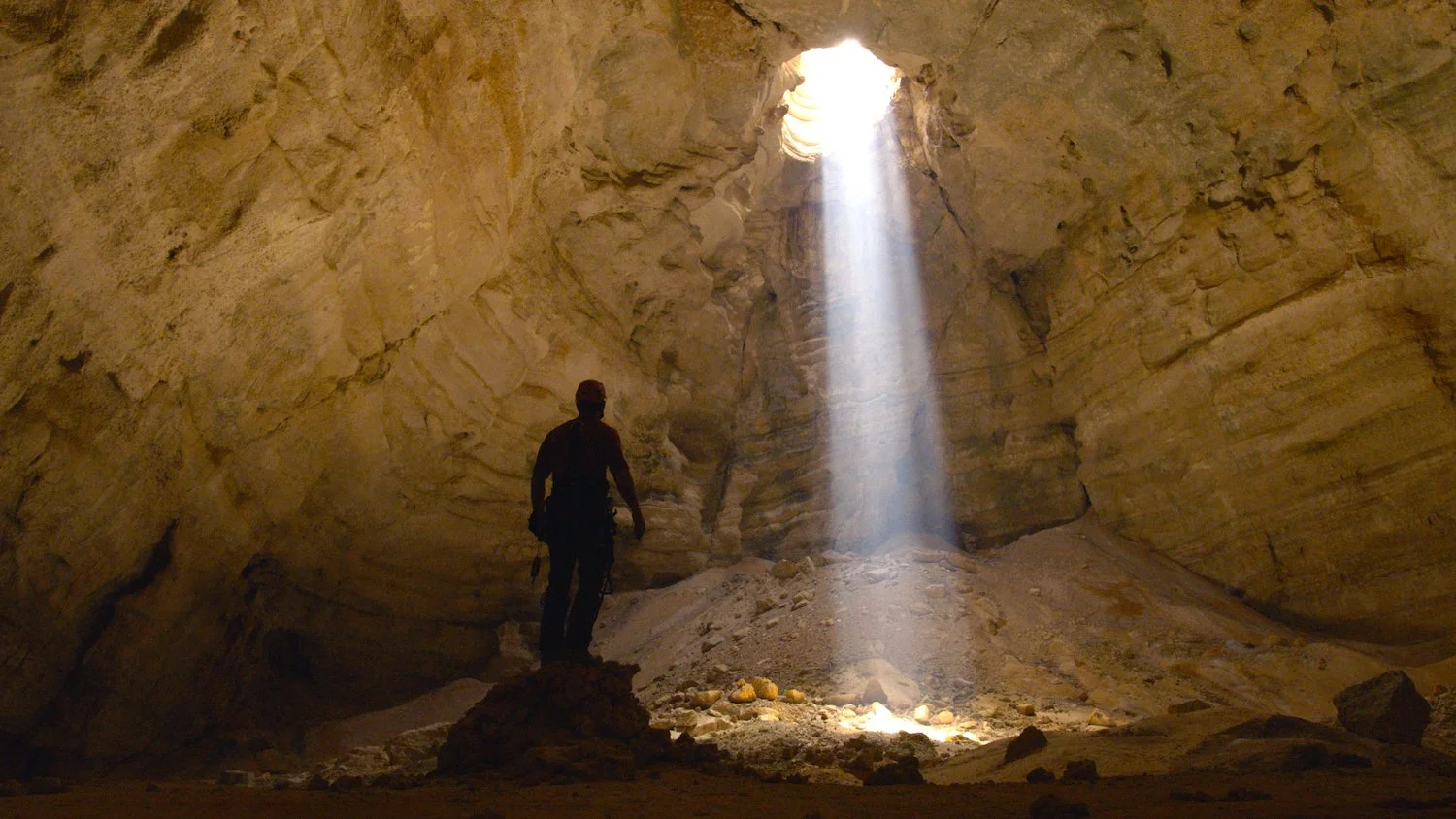
Intelligence without ambition is a bird without wings, Salvador Dali once said, and Our Great National Parks, Netflix’s visually stirring five-part paean to Earth Day, is nothing if not ambitious. The opening hour, A World of Wonder, narrated and hosted by former US President Barack Obama, tries — and largely succeeds — to show viewers things we have never seen before, no matter how many nature programs we may have seen, from hippos surfing the waves of the Atlantic Ocean off the coast of Gabon’s Loangu National Park for the sheer fun of it, to white lemurs making death-defying leaps between jagged limestone pinnacles in Madagascar’s remote Tsingy de Bemaraha National Park in search of a new home. The visuals are wondrous. Our Great National Parks is one of the most crisply photographed nature docuseries ever committed to film. The cinematography is simply stunning at times, life-affirming and achingly beautiful.

The lemurs, a critically endangered subspecies known as the von der Decken sifaka, rely of leaves for food, and water, but resources in their patch of forest are running out. The only fresh food lies in small, shaded sanctuaries scattered between the limestone peaks, amaze of craggy, razor-sharp spires between the lemurs and survival. Below lie gaping chasms. One false step would mean certain death. Baby, just eight weeks old, has to apply all his strength to cling to mom. The added weight makes it harder for the mother lemur, a single misstep could prove fatal. It’s an epic and exhausting journey for both mother and child, and a metaphor for conservation as a whole. 

The sequence was made possible only through the use of drones, and drones play a key role throughout the series. The opening hour features a broad view of national parks around the world and the conservation movements that spawned them — not just lemurs in Madagascar but Old World macaques in Japan, three-toed sloths in Costa Rica, salt-water crocodiles in northern Australia, green sea turtles on Raine Island on Australia’s Great Barrier Reef, and, in a fitting end to the first hour, mountain gorillas in Rwanda.

The following episodes are more tightly focused on specific regions: Chilean Patagonia in the second hour, Kenya’s Tsavo National Park in the third hour; California’s Monterey Bay National Marine Sanctuary in the next hour; and finally Indonesia’s Gunung Leuser National Park, the last rainforest in Asia and home to the last natural stronghold for forest elephants, Sumatran rhinos, orangutans, and critically endangered Sumatran tigers. 

The global movement of national parks has created a world where 15% of land and nearly 8% of our oceans have been protected, most of it created in the past 50 years.

Ah, but therein lies the rub. Realistically speaking — and with Earth Day in mind — 15% and 8% seem absurdly low, given that the future of the entire planet may well rest on the natural world. What happens in nature, and inside our parks, affects us all. Rainforests, for example, are home to more than half of all life on land. If you’re unsure why biodiversity is important to protect, Obama adds, consider this: A quarter of all known medicines originated in rainforests. Science is still discovering new medical advances — hiding in plain sight.

Our Great National Parks, while beautifully photographed, follows a by-now-familiar, some would say overly familiar, formula. The music is cloying and overbearing at times, swinging wildly between jaunty cutesiness to empty bombast, where silent pauses and the natural sound of the ocean, rainforest and wind-swept desert plains would have cast a more enchanting spell. 

Some of the stories-within-a-story have a contrived feel to them, as if neatly tied up in a bow to fit the narrative.

And the increasingly alarming effects of climate change, global heating, extreme weather, widening pollution, biodiversity and habitat loss — just some of the reasons driving the national park idea in the first place — are relegated to the end of the first hour. A World of Wonder ends with an uplifting success story about how mountain gorillas are mounting a comeback across Central Africa: in Rwanda’s Volcanoes National Park, the Democratic Republic of Congo’s Virunga National Park, and Uganda’s Bwindi Impenetrable Forest.

It’s a drop in the bucket when weighed against all the other problems facing our world of natural wonders, but it at least offers reason for hope. In the end, Our Great National Parks is about exactly that — hope.

                                    — Netflix

©Netflix

Tags: Earth Day, Our Great National Parks, Netflix, sifaka, lemur, Madagascar, mountain gorilla, Rwanda, Volcanoes National Park, Virunga National Park, DRC, Bwindi Impenetrable Forest, Loangu National Park, Gabon, surfing hippos, three-toed sloth, Costa Rica, Monterey Bay National Marine Monument, Gunung Leuser National Park, Sumatra, Chilean Patagonia, Raine Island, Great Barrier Reef, green sea turtle, Tsingy de Bemahara National Park, Japanese macaque, Tsavo National Park, hippos, climate crisis, climate breakdown, biodiversity, habitat loss, national parks, Barack Obama

Courtesy of Florian Schulz ©Tom Campion Foundation/Terra Mater Factual Studios

PBS Nature: American Arctic

April 10, 2022

On top of the world, it is still the ice age. But for how long? Almost everything about the Arctic National Wildlife Refuge as depicted in PBS Nature’s eye-filling program American Arctic is a study in beauty, from one of the last great caribou migrations on Earth to the ice-crowned peaks of the Brooks Range that separate the feeding grounds of the caribou to the high Arctic Ocean above. This is nature at its most extreme, where dawn twilights usher in the deepening winter and giant muskoxen try to dig down to the frozen grass to keep themselves alive. It is eight degrees warmer on average than it was just 50 years ago, and the climate is growing more erratic. 

Freezing rain is becoming more common, which makes it harder for the muskoxen and caribou to reach life-giving sustenance. Caribou can dig through wet snow but when rain freezes during the long polar nights, it turns to ice, which is harder for the caribou to break through without injuring themselves.

Muskoxen were hunted to extinction throughout Alaska in the 1860s but were reintroduced in the 1930s, and therein lies a tale. There are now a few thousand living in Alaska but still, even so, every calf is precious. Survival in such a harsh environment is tenuous and yet, watching American Arctic is to marvel at nature’s resilience in the face of fearsome obstacles. 

We’re living through worrying, troubled times, and yet there’s something pristine and oddly calming about well-made nature programs, especially when they’re quiet and reverential. American Arctic is that, and more. It’s moving without being sentimental and cloying, and the quiet narration, filled with graceful pauses and long silences, creates an almost holistic feeling of reverence for nature.

Back in the world, on those rare occasions when the Arctic National Wildlife Refuge makes the news, it’s usually to do with speculative drilling for oil and gas — a constant threat to the wildlife sanctuary that runs cycles of its own, depending on who's in power in Washington, DC at any given time — or the controversy over wolf culls driven by the idea that the real threat to the 160,000 caribou that remain are packs of ravenous wolves and not the climate crisis.

American Arctic skates over politics for the most part and instead focuses on nature in the raw, leaving viewers to form their own conclusions. 

The filmmakers followed the Porcupine herd, arguably the Arctic’s most-followed and studied herd of caribou, for a full year. Summer poses different threats to the migration than winter, and a peaceful respite is hard to find. There is less snow and ice, but biting flies drive the caribou to extremes to avoid them. Rising temperatures have caused unprecedented ice loss in the Beaufort Sea throughout the year, with the result that polar bears that winter on the pack ice, hunting seals, arrive on dry land earlier and thinner each spring. Everything in nature is connected, and when one link in the chain breaks, the entire food chain is affected. American Arctic is gentle and giving, a welcome relief from the bombast and noise that permeates so much of popular entertainment today. The Arctic National Wildlife Refuge supports a greater variety of plant and animal life than any other protected area in the Arctic Circle, and this program makes it easy to see why. In a world of so much decline, it’s good to know places such as this still exist. Life carries on.

American Arctic premieres Wednesday, April 13 on PBS at 8/7C, on the PBS app, and at PBS.org.

Courtesy of Florian Schulz ©Tom Campion Foundation/Terra Mater Factual Studios

Tags: American Arctic, PBS Nature, Florian Schulz, Terry Mater Factual Studios, PBS, Nature, Arctic National Wildlife Refuge, ANWR, caribou, muskoxen, polar bears, caribou migration, climate crisis, climate breakdown, Beaufort Sea, Alaska, Arctic Circle, ice melt

©Will Steenkamp - PBS Nature

PBS Nature: Hippo King

March 31, 2022

At first glance, this week’s PBS Nature program Hippo King takes a page from the BBC Dynasties school of nature programming, in which intrepid filmmakers follow a single family of animals in their natural habitat over a period of several years. Field biologists and other academics take a dim view of the anthropomorphism of wild animals. Still, as Dynasties showed, audiences connect more with a story if they can chart the life of one life over a period of several years. The baby hippo at the heart of Hippo King’s opening scenes will grow, as the title foreshadows, to become a leader among leaders. It’s The Lion King origin story all over again, and while it’s true that linking animal behaviour to our human behaviour can seem cloying and overwrought at times, there’s something to be said for engaging as broad an audience as possible. The truth is, as the world edges toward Earth Day later this month, the world’s remaining wild places are in serious trouble, beset on all sides by climate breakdown, human overconsumption, and political leaders who range from apathetic and ineffectual to homicidal and despotic, bent on war, genocide and planet-wide destruction of the environment. Set against such an appalling backdrop, a tale of baby hippo growing up to become king of his domain may seem a light-hearted diversion.

Hippo King is anything but, however. Survival is an individual pursuit, after all. Some survive, others don’t. The cycle of life often turns on the finest of margins — an unforeseen accident, a chance encounter with a hungry lion, sharing a watery home with crocodiles lying in wait for an easy meal.

Hippo King was filmed over five years in Zambia’s Luangwa Valley, a riverine region in Southern Africa relatively untrammeled by convoys of tourist jeeps — Luangwa was one of the pioneers on the African continent of so-called ‘walking safaris’ — and so there’s a freshness to what might seem to the unpracticed eye like just another nature program about African wildlife. Witnessing the day-to-day struggle for survival of the fittest while on foot is an entirely different experience from watching from the relative safety of a 4x4 Land Cruiser, and Hippo King provides the kind of intimate and personal view usually reserved for a safari on foot.

Hiking across the African savanna is out of reach for most nature enthusiasts, though, so programs like Hippo King, when they’re well made — and Hippo King is at the high end of the nature-filmmaking spectrum — serve a useful purpose.

There’s an affecting moment, early in the film when, stricken by hunger and dehydration, the future king’s mother perishes in the heat and dust, and the adolescent hippo, standing over his mother’s body, tries to fend off a pride of lions from feeding on her remains. Eventually the adolescent hippo makes it to safety in the nearby river, but the die is cast: This young bull may become king one day but it will not be an easy life.

Hippo King is graced with an affecting musical score — none of the usual rote, computer-generated noise of most documentary programs — and the cinematography, culled from five years of footage, is resplendent and revealing by turns.

Hippo King also benefits from recent, dramatic advances in infrared camera technology that allows filmmakers — and viewers — to see at night, when wild animals tend to be more active than in the white-hot glare of noonday heat. The sound recording, mixing and editing are crisp and clear throughout, and that’s a valuable addition. Sound in nature films can be just as important as the visuals.

Hippos are not the animated dancing ballerinas of Disney’s animated Sword in the Stone, nor are they the bad-tempered night raiders often accused of killing more people in Africa than any other wild animal — a misleading statistic. They are surprisingly shy and complex creatures, with day-to-day lives distinctly different from other, more familiar African mammals like rhinos, elephants and lions.  

In the end, Hippo King is a tale of survival that works on several levels, from micro — one hippo’s life story — to macro: the effects increasingly volatile and rapidly changing climate patterns are having on entire ecosystems.

Hippo King premieres Wednesday, April 6 on PBS Nature at 8/7C (check local listings), at pbs.org/nature and on the PBS Video app.

©Will Steenkamp - PBS Nature

Tags: PBS Nature, Hippo King, hippos, anthropomorphism, Earth Day, climate breakdown, Luangwa Valley, Zambia, nature programming, PBS, environment, extinction event, zoology, animal behavior

©True to Nature

Expedition: Unpacked

March 14, 2022

Armchair adventurers are bound to get a kick out of Expedition: Unpacked, but anyone looking for more than the usual, rote jocks-in-the-rocks home video hosted by a manly man with an excitable British accent is liable to be disappointed. “One year of expeditions!” Expedition expeditioner Steve Backshall crows in Unpacked’s opening moments. “Hundreds of adventures! Many unforgettable moments! Moments that nearly stopped us in our tracks! Adventures that made us question whether we should really be out there!”

Well, yes. “Out there” can be wondrous, inspiring, life-changing — full of those moments of calm introspection that come from communion with nature.

Well … Expedition: Unpacked ain’t that.

“Points where we knew if we took one step further,” Backshall cries, “there was no turning back!” 

As if to underscore the moment, Backshall screams.

Perhaps it’s the editing. Jocks-in-the-rocks docs are edited to mimic extreme-sports programs these days, with peppy music and fast, frenzied jump cuts. They’re made for the generation with nanosecond attention spans, taking the TikTok route to the summit of Mt. Everest.

“These are the stories of those extreme adventures!” Backshall says.

Ah, yes, there’s that word ‘extreme’ again. Kids, pay attention! 

“Of epic world firsts!” 

Ah, yes. ‘Epic.’ Another box ticked. 

“I’m Steve Backshall! And this is Expedition: Unpacked!”

By this point, you know just you’re not going to be pulling up a chair to David Attenborough, or viewing The Blue Planet on your smartphone. This is an infomercial for outdoor adrenaline junkies, though God help you if you try these stunts at home. I’ve had personal experience with jocks in the rocks who are so into their own private Bear Grylls vibe that they can get themselves — and everyone around them — into serious trouble. Never mind Don’t try this at home! Don’t try this outdoors, either, unless you’re a professional . . . or a TV presenter.

Expedition: Unpacked, four hour-long programs that air Wednesday nights on PBS over the next month, follows Backshall in a story of “four extreme moments, when I took on ferocious Himalayan white water, treacherous Arctic mountains, Arabia’s deepest canyon . . . but my experiences in Bhutan were not just life-changing, they were almost life-ending!”

Well, yes, that’s what the safety crew is there for. The best episode of Expedition: Unpacked by far is the final hour, which airs April 6. That’s the one at the very end, where cameras go behind the scenes and focus on the camera team and support crews that make the expeditions possible. Backshall still can’t resist hogging the spotlight, even in a behind-the-scenes episode, but on balance, this hour is the most revealing of the four, and the one most likely to make the viewer feel they’re part of the action.

For a more affecting, emotionally gripping reality series about ordinary people in extraordinary circumstances, you’re better off turning to The World’s Toughest Race: Eco-Challenge Fiji, which first streamed on Amazon Prime Video two years ago, in 2020. In that one, 60 teams of four paddled, cycled and hiked non-stop for 10 days through hundreds of miles of rugged, mountainous terrain on a South Pacific island. Eco-Challenge was about self-appraisal, challenging oneself to one’s outer limits for the sake of adventure, and for the occasional epiphany along the way. Expedition: Unpacked, in its first hour anyway, seems to be more about one person showing off for the camera. The Fast and Furious generation will love it!

The opener follows Backshall on a river run in a whitewater kayak, and in case that sound exciting enough for you, the entire hour is backtracked with one of those relentless, computer-generated synth soundtracks that never lets up for a moment, the kind of music that screams, This is exciting! Are you not excited?

Not for me. And if you like Attenborough documentaries as much as I do, or you enjoy embarking on actual expeditions into the unknown as I do, Expedition: Unpacked likely won’t be for you, either.

There’s an inner peace that comes with being alone in the wilderness, far from human contact. You won’t find any calm or moments of reflection in Expedition: Unpacked. Instead, expect a jock shouting at you for a full hour.

“I was full of confidence!” Backshall cries, early in Wednesday’s opener. That’s the problem.

Expedition: Unpacked premieres Wednesday on PBS at 10/9C and on the PBS app, and continues Wednesdays through April 6.

©True to Nature

Tags: Expedition, Expedition: Unpacked, Steve Backshall, PBS, Eco-Challenge Fiji, Amazon Prime Video

©Ami Vitale PBS Nature/The WNET Group and TMFS GmbH

PBS Nature: American Horses

February 21, 2022

“Their horses appear to be of an excellent race; they are lofty, elegantly formed, active and durable: in short many of them look like fine English coursers and would make a figure in any country.”

     — Meriwether Lewis, Lewis and Clark Expedition, Journal entry, Feb. 15, 1806

At first glance the PBS Nature program American Horses (Wednesday, PBS, 8/7c) presents itself as an overview of the four horse breeds that have traditionally called the New World home — the Morgan, Quarter Horse, Appaloosa and the Mustang and, as with all programs of its kind, American Horses will appeal to different viewers for different reasons.

To these eyes, though, it’s the passage on the Appaloosa that struck the deepest chord.

Perhaps that’s because, as a non-horse person, I responded to the way the program makers chose to focus on the close relationship between these semi-wild horses — most identifiable by the vibrant, spotted patterns of their coats, and the indigenous Nez Perce First Nations tribe, who have lived on the Columbia River Plateau in the US Pacific Northwest for some 12,000 years.

The Nimíipuu people and nearby Chinook — collectively dubbed Nez Percé by French explorers and trappers who somewhat lazily defined all indigenous people in the area by the loose translation, “pierced nose,” even though the Chinook were the only First Nations tribe in the region to use that body modification — started to breed the Appaloosa in the 18th century. The Nimíipuu were part of a widespread, far-reaching network of indigenous tribes across coastal Oregon and Washington State, over the Rocky Mountains to the high plains of Montana and the northern Great Basin of Idaho. At the widest extent of their range the Nez Perce — Appaloosas in tow — could be found as far south as Nevada.

The Nez Perce may have started developing the Appaloosa as an original American breed in the mid- to late 1700s — after first obtaining them from the Shoshone First Nation around 1730 — but cave paintings, depicting wild horses with distinctive spotted coat patterns range as far afield as Ancient Greece and the Han dynasty in China. Early European settlers in the Pacific Northwest dubbed the horse the “Palouse horse,” probably after the Palouse River, a tributary of the Snake River that links Washington State with Idaho. Over time, the name was shortened to ‘Appaloosa.’

American Horses, narrated by the American actor Bill Pullman — himself a rancher; Pullman co-owns a cattle ranch with his brother in Montana, near the town of Whitehall — touches on how the Appaloosa has evolved to become one of the most recognizable and widespread horses of the New World. Appaloosas have retained their traditional wild streak over the decades — and centuries — and have been used in many movies.

That said, they’re not particularly “child friendly” and have a reputation for being “opinionated” (American Horses producer Eric Bendick’s word), tough, willful, resilient, fast runners, difficult to handle at times, and quick to adapt to varying terrain and ever-changing climate patterns.

The traditional relationship between the Nez Perce and the Appaloosa “was a very powerful part of the filming process,” producer Bendick explained, in a teleconference call with writers in the TV Critics Association. “It took us several years of conversation to be welcomed and learn their traditions. Some of the stories they shared with us are the first time these stories have been told on film.

“So we had a huge responsibility. We did a lot of long listening, to understand their point of view, to understand the Appaloosa, to understand the beautiful place that the Appaloosa come from and how complex that journey has been, for both (the horses) and for Native American people.

“My sense is that that is one of the things that has kept their culture alive, and kept their families together over extended generations. For us to share that message helps provide a small ray of hope, I think, for a culture that has faced a lot of adversity. It was a beautiful thing for us to know we could be a part of that, to celebrate the younger generation, the up-and-coming riders who are so fun to watch. They really are free in their spirit, their understanding of what the Appaloosa means to their family tradition, taking that torch and moving it forward.”

The fascinating life story of the Appaloosa is only one small part of American Horses — there’s only so much story a program can tell in less than an hour after all — but that small part pries open a window onto the Big Picture of the historical connections between wild horses and the various indigenous tribes across the American West, and their connection to the natural world.

Perhaps, one day, the Appaloosa — and the Nez Perce themselves for that matter — will warrant a full documentary series in their own right.

American Horses premieres Wednesday on PBS at 8/7c, at pbs.org/nature and on the PBS Video app.

©Jeff Reed PBS Nature/The WNET Group and TMFS GmbH


Tags: American Horses, PBS Nature, Nez Perce, Nez Percé, Appaloosa, Morgan horse, mustang, quarter horse, wild horses, Eric Bendick, Bill Pullman, Television Critics Association, TCA, Lewis and Clark, Meriwether Lewis, Native American, First Nations, Chinook, Nimíipuu, Montana, Idaho, Snake River, Palouse River, Whitehall Montana
Prev / Next

Journal

“Man is modifying the world so fast and so drastically that most animals cannot adapt to the new conditions. In the Himalaya as elsewhere there is a great dying, one infinitely sadder than the Pleistocene extinctions, for man now has the knowledge and the need to save the remnants of his past.”

— Peter Matthiessen


Featured Posts

Featured
1.bourdain hong kong.jpg.png
Aug 19, 2025
Bourdain in Hong Kong
Aug 19, 2025
Aug 19, 2025
1.ABPU_S11_Armenia3.jpg.png
Jul 21, 2025
Bourdain in Armenia
Jul 21, 2025
Jul 21, 2025
art1.jpg.png
Jun 25, 2025
Bourdain in Uruguay
Jun 25, 2025
Jun 25, 2025
1.bourdain congo2.jpg.png
Jun 8, 2025
8 June — Bourdain Remembered
Jun 8, 2025
Jun 8, 2025
1.Screen Shot 2025-05-27 at 5.41.13 AM.jpg.png
May 31, 2025
Bourdain in Southern Italy (with Francis Ford Coppola)
May 31, 2025
May 31, 2025
8.dsc09592.jpg.png
May 17, 2025
Bourdain in Puerto Rico
May 17, 2025
May 17, 2025
9.11216842-anthonybourdain-srilankajpg-c-web.jpg.png
May 4, 2025
Bourdain in Sri Lanka
May 4, 2025
May 4, 2025
b.art1.png
Apr 17, 2025
Bourdain in Lagos, Nigeria
Apr 17, 2025
Apr 17, 2025
1.art website.jpg.png
Apr 10, 2025
Bourdain in the French Alps (avec Eric Ripert)
Apr 10, 2025
Apr 10, 2025
1.art (2).jpg.png
Apr 2, 2025
Bourdain in Singapore
Apr 2, 2025
Apr 2, 2025