
• Entr'acte
  • Living Landscapes
  • Dispatches
  • Natural History
  • Panthera
  • Elephantidae
  • Bibliothèque
  • About
  • Menu

Strachan Photography

  • Entr'acte
  • Living Landscapes
  • Dispatches
  • Natural History
  • Panthera
  • Elephantidae
  • Bibliothèque
  • About
©Predrag Kezic - Pixabay

©Predrag Kezic - Pixabay

Saving Endangered Species in the Age of Covid: ‘If It Pays, It Stays’ No Longer Good Enough

June 21, 2020
“It is no longer about waiting for international visitors to come in. If we start now [to appeal to local tourists], in five years we will be resilient to any shocks, even travel advisories imposed by Western countries.”
— Najib Balala, Minister of Tourism & Wildlife, Kenya

A swimming pool with a view may seem like one of those idle luxuries of the very rich, but strange as it may seem that infinity pool used to play a vital role in wildlife conservation during these uncertain times of climate crisis and the fast looming sixth mass extinction.

Used to, that is, because the Covid-19 coronavirus pandemic has thrown an unwelcome curve ball through the entire business model of ecotourism, and the rapidly vanishing wilderness areas and dwindling wildlife — familiar, iconic animals like lions, tigers and polar bears — that depend on it for survival. The old adage “If it pays, it stays” isn’t much use if no one’s there to pay.

“Gazing at the distant profile of Mt. Kenya from lightly chlorinated water in the African bush might seem like a bearable way to sit out the crisis, but the infinity pool at Loisaba tented camp, one of three safari lodges in a 23,000-hectare reserve of the same name, hasn’t seen a swimmer in months,” the Middle East-based journalist Christopher de Bellaigue wrote this past week in a 5,500-word investigative report in The Guardian, titled portentously, ‘The end of tourism?’

“The damage done by the collapse of Kenya’s tourism industry, which is worth $1.6 billion and employs 1.6 million people, is fearsome. . . . The website of another reserve, the Nashulai (Maasai Conservancy), is emblazoned with a plea for donations to combat starvation among the communities that rely on it.”

Much like nature itself, it’s a fine balance.

One of the unintended — and beneficial — side effects of the coronavirus pandemic and subsequent lockdowns was a return to a healthy natural world in many wilderness areas, even if only briefly. Fewer people — fewer tourists — allowed wild animals to take a breather from the constant noise, and carbon footprint, of thousands and, in some cases, tens of thousands of overseas visitors. (One of the more worrying ironies of wildlife tourism is that, in most countries in the developing world where the world’s last, vast protected wilderness areas are to be found, is that it’s priced out of reach of the people who live there.)

The vast majority of the 2 million foreign visitors who came to Kenya in 2019 came for the wildlife. Were it not for tourism, many of the nearly 200 privately owned reserves that act as vital wildlife corridors for migrating animals would not survive. And while gazetted national parks may seem vast, if fenced in they would soon surpass the gazing capacity of the animals who live there.

Animals like wildebeest, elephants and zebras need to move, in order to survive.

And that movement often means straying outside park boundaries, following the life-giving rains — and the freshly growing grass that follows — to keep the circle of life turning. Competition between local communities and the region’s unique wildlife, exacerbated in recent years by drought — climate change, again — has only intensified. The competition reached critical mass before the pandemic; the coronavirus has made a bad situation worse.

Loisaba, de Bellaigue notes, has been able to pay the wages of anti-poaching patrols thanks largely to a donation from The Nature Conservancy, an NGO that provides advice and financial backing for scientific projects around the world.

The trouble is, that model is not sustainable over the long term, not when paying tourists pay more than $500 a day to be around wild giraffes, elephants and, if fortune be so bold, lions and rhinos. Tourism, one NGO stakeholder noted, “tangibly contributes to conservation outcomes” and is “the best way to finance biodiversity.

“Without it, the idea that one can protect the animals and help local people falls apart.”

The Covid-19 pandemic looks as if it’s here to stay for months if not years to come, and the economic fallout is not just limited to tourism. 

As with so many things, the coronavirus and subsequent lockdown and travel bans has only highlighted an issue that was there already, but had been conveniently overlooked: Tourism relies on other decisions made by other people in other places to sustain itself.

It doesn’t matter what value a tourist destination provides, or what kind of a unique, life-changing experience it may offer, all decision-making control lies in the hands of the buyer — usually overseas — and not the local seller.

Tourism is not the right many holidaymakers seem to think it is, de Bellaigue noted. It’s a luxury that needs to pay its way.

Wilderness and endangered species are a necessity, though, and a moral obligation. Whether or not they pay their way is not the issue. Much has been said that the coronavirus pandemic will force us to look at new ways of doing things. The old ways are no longer good enough, if they ever were.

It’s about finding the right balance, before it’s too late. Jane Goodall and Greta Thunberg — separated in years by more than half a century — have said as much. The Covid-19 pandemic is terrible, and has caused terrible disruption for so many people. It’s also an opportunity — but only if we choose to seize it.

©Jan Vašek - Pixabay
©Jan Vašek - Pixabay


Tags: Najib Balala, Ministry of Tourism and Wildlife, Kenya, Covid-19, pandemic, coronavirus, ecotourism, Christopher de Bellaigue, The Guardian, Loisaba, Nashulai Maasai Conservancy, wildlife corridors, animal migrations, human wildlife conflict, national parks, private reserves, The Nature Conservancy, Sixth Mass Extinction, Jane Goodall, Greta Thunberg
©Pixabay

©Pixabay

Five Things You Can Do to Help the World’s Wildlife Make a Last Stand

June 13, 2020
“I’m asking people to change their minds and their practices, and the human species, for all its remarkable intelligence, adaptability and resourcefulness, is not very good at changing its mind. As a consequence some of the people I find myself in conflict with do some quite unpleasant things in order to try and dissuade me from my mission. Not that it’s going to work. I am resolute in my determination.”
— Chris Packham

Some truths remain self-evident, even in this crazy, ever-changing world we find ourselves in. The forced lockdown on ecotourism, for example, is threatening conservation efforts worldwide. We know this. Airlines are no longer flying, transnational borders are closed and the many, many local people who live in the developing countries that still have the wilderness and wildlife left to conserve are out of work, going hungry and running out of options.

That’s just one reason why the New Big 5 project — wildlife photographers’ campaign to name a new “big five” group of iconic animal species, this time focused (pun unintended) on photography rather than big-game hunting — is not only a welcome diversion but serves a useful function, too. The New Big 5 website shines a spotlight on a number of vital related but unrelated issues — what you and I and all of us can do to help the world’s wildlife, for example. Animals across the planet need our support more than ever, so it’s good to know there are some things we can all do that don’t necessarily require deep pockets and exotic trips to see mountain gorillas, polar bears and snow leopards in their natural habitat.

The early days of the pandemic saw a captive audience (again, pun unintended) binge-watching the likes of Tiger King on Netflix, which — while fun to watch — skirted the wider issue of whether it’s moral or even practical to keep wild animals penned up in cages strictly for our amusement and entertainment.

It shouldn’t come as any surprise, then, to see that two of the “5 Things You Can Do to Help the World’s Wildlife” on the New Big 5 website’s home page, is to choose activities that don’t commercially exploit animals (No. 2) and avoid wildlife selfies (No. 4).

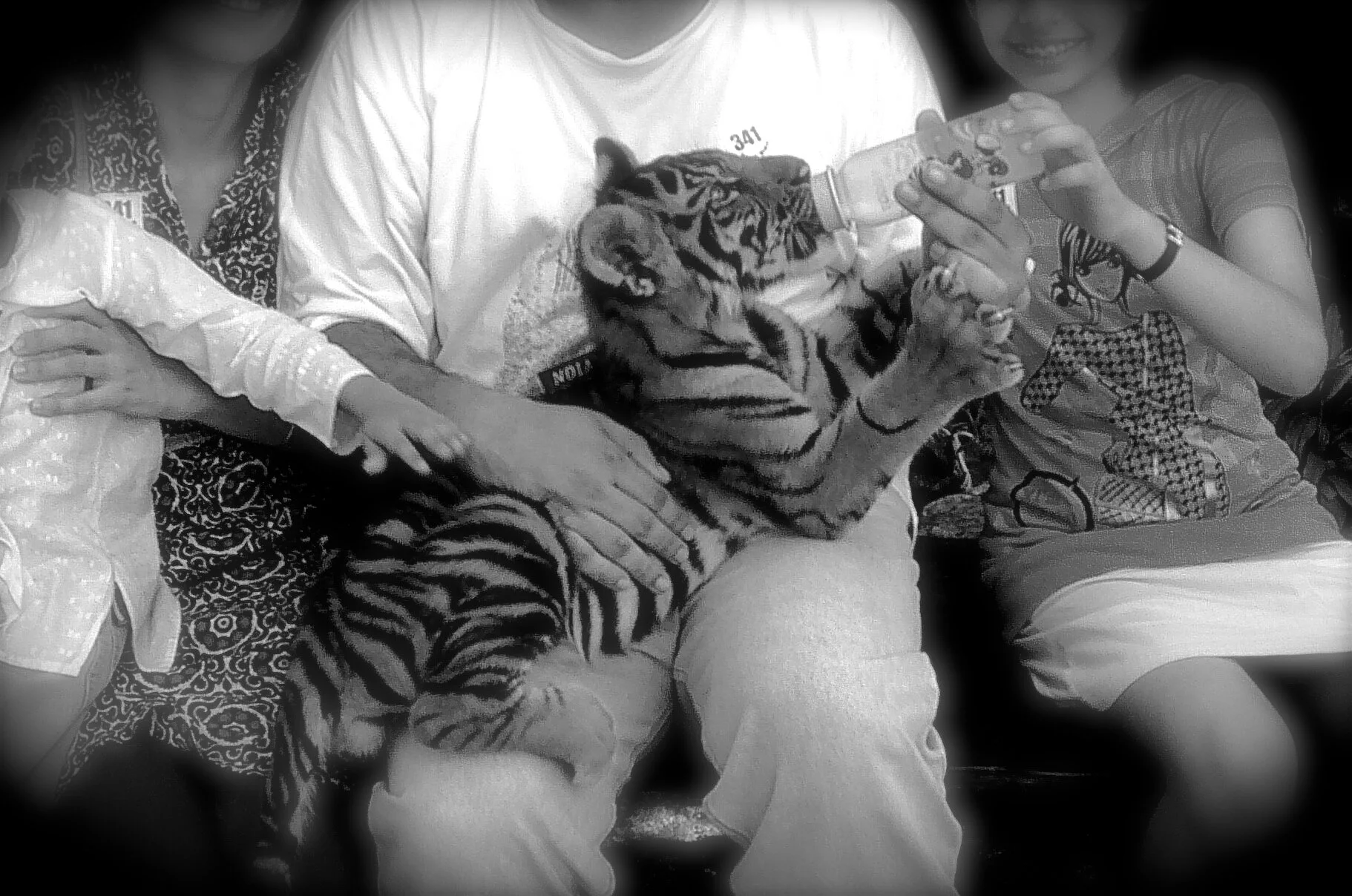
It’s worth noting, for example, that even a well-respected, well-intended — and popular — reality-TV competition program like the multiple Emmy Award-winning The Amazing Race ran a leg through Thailand’s Tiger Temple one season, where Buddhist monks, who supposedly revere tigers, charged tourists — and Amazing Race contestant teams — to have their picture taken with tiger cubs. Within months of The Amazing Race giving the Tiger Temple the kind of publicity money can’t buy, investigative  journalist Sharon Guynup and National Geographic photographer Steve Winter — one of the photographers who has given his time and expertise to the New Big 5 Project — exposed the Tiger Temple as a kind of glorified, exotic puppy mill, with all that that implies. The Temple was shut down and the tiger monks disbanded, but it has since reestablished itself as a tourist attraction — until, that is, the Covid-19 pandemic and subsequent lockdown, well, locked everything down again.

That, too, shall pass, though — one day. The New Big 5’s list of five things you can do to help wild animals will apply long after Covid-19 is, hopefully, just another bad memory.

The five:

1. Avoid buying wildlife products.

That isn’t just ivory or tiger bone, but also exotic pets. As a general rule, any online sales pitch that says you’re helping conservation by buying animal products, isn’t. If conservation is your priority, donating to local, community based NGOs — school supplies, clothing, food etc. — is money far better spent, especially during the Covid pandemic.

2. As mentioned earlier, choose activities that don’t commercially exploit animals.

Elephant rides are not good for the elephants, and “walk with lions” excursions  have more to do with feeding the canned hunt industry (you don’t want to know, but just as bad as it sounds) than anything to do with lion conservation.

3. Protect our ocean environments from more pollution.

In a word, lose the plastic. Choose refillable bottles and coffee cups over the Starbucks and Safeway kind, for example. Big companies like Starbucks and Safeway are determined to destroy the environment through their actions, and they’re using Covid panic as an excuse to help them do it.

4. As mentioned earlier, avoid wildlife selfies.

It’s not just that tiger cub selfie at a mock temple in Thailand, either, but that grotty roadside attraction in Oklahoma run by a dyed-in-the-wool weirdo. The Instagram generation, too, has encouraged a whole new group of morons to harass bears and wolves in national parks, all for the sake of an “I was there!” memory shot. That’s not an issue now, while most parks remained closed to visitors, but it will be when the lockdowns ease and national parks open again.

5. Say no to eating whale meat. 

Frankly, I never said yes to begin with — my weakness is fast food, which Greta Thunberg, Chris Packham and others will tell you is worse, and they may be right — but opting not to chow down on whale meat seems like a small price to pay for, well, saving a whale.

The New Big 5 Project has endorsed IFAW’s “Meet Us, Don’t Eat Us” campaign, which asks tourists to whaling countries to consider whale-watching tours — again, not ideal, because of the sound distortion caused by boat engines — over sampling whale meat. Yes, hard as it may be to believe — if you live in a country, for example, where whale meat is not on the menu — that’s a thing.

Or better yet, as New Big 5 founder Graeme Green suggests, visit the International Fund for Animal Welfare’s main website (www.ifaw.org) and follow them on Instagram (@ifaw.global), for inspiration and for ideas on what you can do to help. Pandemic or no pandemic.

https://www.newbig5.com/?s=5+things+you+can+do

©Pixabay

©Pixabay

Tags: wildlife extinction, New Big 5 Project, Graeme Green, 5 things you can do, Chris Packham, COVED-19, coronavirus, climate crisis, ecotourism, pandemic, lockdown, conservation funding, National Geographic, Tiger Temple, Wat Pha Luang Ta Bua Yanasampanno, Theravada Buddhist, Sharon Guynup, Steve Winter, ocean environment, IFAW, International Fund for Animal Welfare, animal selfies, elephant rides, walk with lions, plastics, Instagram, @ifaw.global, ifaw.org, newbig5.com, Greta Thunberg
©TruthSeeker images-Pixabay

©TruthSeeker images-Pixabay

For What Is Truth? Is My Truth the Same As Yours? Looking Inside the Post-Modern, Post-Covid Debate

June 06, 2020
“I write this because now more than ever, talking past one another and point-scoring seems to be becoming a favourite pastime, with snarky Twitter comments somehow passing for actual conversation and non-sequiturs replacing real arguments. But it doesn’t work like that. Minds aren’t changed because someone batters them.”
— Marcus Westberg, on Facebook

For what is truth? Is my truth the same as yours?

Marcus Westberg, an award-winning visual storyteller from Sweden with National Geographic and The New York Times to his list of credits, posted a timely essay the other day on Instagram, and posted an expanded version on Facebook, about how even at their most cruel, few people do things they truly believe are wrong. He cautioned about being too quick to judge — I do it all the time — and pointed out the futility of trying to convince someone to your way of your thinking if you’re abrasive and confrontational.

Again, I do it all the time, in part — and this is just an excuse, mind, because deep down I know the wisdom of what Westberg is saying — because in my 30+ years in daily journalism I saw many examples of people, often in positions of authority, who themselves were often abusive and rude to those around them, who then walked away  without so much as a scratch, let alone being called to account for their actions.

In my semi-retirement, whether it’s a monied, privileged dentist from Minnesota who shoots an aging, habituated lion in Zimbabwe for the trophy wall, or heavily armed police officers using raw, unbridled  savagery and force against unarmed, peaceful demonstrators at a protest rally for the sanctity of human lives, my position has, if anything, hardened.

These days, when I see a Trump rally on social media, I no longer want to talk to those Trump supporters, to reason with them, to “listen to what they have to say.” I think some people — and Trump supporters at Trump rallies are among them — are beyond reasoning with.

Marcus’ words struck a chord in me, though, because he posted them the same day Newark, New Jersey former mayor, one-time Democrat US presidential candidate and present-day United States  senator Cory Booker gave a powerful, emotionally charged testimonial to late-night TV talk-show host Stephen Colbert this past week. logic and careful persuasion, through stating a clear,

coherent case that even a dyed-in-the-wool sceptic will accept.

Sen. Booker invoked the words of the late Dr. Martin Luther King in noting how one must try to check one’s emotions when confronting those who disagree with you, even those who perpetuate and  celebrate injustice.

“King said something, and this is the problem, ‘We want an enemy, people need an enemy,’” Booker told Colbert. “Well, I’m telling you right now it’s not that. King said it so eloquently, even as his life was being threatened, as he was getting death threats. . . . We want to blame people with hate in their hearts, but that’s not the majority of us. King warned us that what we have to repent for is not the vitriolic words and violent actions of bad people but the appalling silence and inaction of good people. I’m hoping this is a period when . . . our circles of empathy expand.”

You may wonder what this has to do with nature, the environment, climate change and the battle to preserve what’s left of the world’s dwindling wild spaces, but as Marcus pointed out in his post, as a wildlife and conservation photographer he has witnessed and experienced some pretty disturbing things over the years, including inexplicable cruelty to both animals and people among them. Most people become defensive when criticized, or when their opinions are challenged. “You can’t go in assuming you have all the answers and they none, because chances are you both feel that way. When you speak, don’t make assumptions about what the other person knows, feels, or can understand. Shaming and patronizing might feel empowering, but it gets you nowhere, and fast.”

Marcus pointed out that talking over each another and scoring cheap verbal points have become all the rage of late, driven by the real-time gratification of social media, with its never-before-seen global reach and instant access, coupled with the culture of cable-news panel discussion programs, where the argument is usually won by whoever can shout the loudest.

©TruthSeeker images-Pixabay

©TruthSeeker images-Pixabay

This all sounds obvious, of course, but when the stakes are high — and they don’t get much higher than the health and future sustainability of our planet — the aim is not who can win the argument but what will be done at the end of it.

From the earliest days of humankind societies evolved, survived and in many cases thrived based on people’s ability to identify a problem, accept the problem as serious and come up with a meaningful solution to deal with it.

Jane Goodall, in a recent interview in The Guardian, warned that if we choose to do nothing in the wake of Covid-19 pandemic, in terms of conserving and preserving what’s left of our natural world, humanity is finished.

Collectively, we won’t accomplish that by arguing — no great revelation there — but arguing is often what we do best.

I would argue, for example, that one can only have a rational conversation if both sides are willing to listen — and in my experience that rules out a great many zealots on the right-leaning end of the political, sociological and philosophical spectrum. The combined catastrophe of the coronavirus pandemic, our growing climate crisis — and it is growing, make no mistake, despite the brief respite caused by lockdowns in the world’s industrialized economies — and civil strife driven by racial injustice and widening financial inequality show us that we have to find a way to see eye-to-eye, regardless of our political beliefs and opinions.

I know, for example, that I don’t want to have a conversation with a climate denier. If there’s even the slightest chance I can win that that climate denier over to my side of the argument, though, by convincing that person to accept that fossil fuels need to go the way of the fossils they were named after — if we’re to continue to breathe the air we breathe and drink the water we drink — then I need to somehow convince that person through logic

and careful persuasion, by stating a clear, coherent case that even a dyed-in-the-wool sceptic will accept.

It’s possible — likely, even — that that climate denier feels the same way about green energy: that it’s a scam, a deliberate drain on the economy that will cost jobs and livelihoods, just as there are those trophy hunters who genuinely believe that by paying vast sums of money to shoot a lion, they are somehow helping protect the species by raising funds for conservation.

There are issues, though, where there can be no two sides to the debate. In the case of the climate crisis, or the need to protect the world’s remaining apex predators in the wild, there is one deciding factor that is undeniable and true, that will be clear to anyone willing to listen, think and accept fact for what it is. And that one deciding factor is science.

As the respected astrophysicist and media polymath Neil deGrasse Tyson has often said, science doesn’t much care whether you choose to believe in it or not: It simply is.

Tyson will be one of the first to tell you that scientists often get it wrong. It’s not the science that’s wrong, though, but rather how the scientists of the day choose to interpret it.

In his post, Marcus asks anyone willing to listen to be prepared to adjust their own stance. 

“And maybe, just maybe, you will get through to someone about something that truly matters to you, in a way that actually counts.”

Later, he added:

 “Obviously, what I’m saying is as much a reflection (of) the current political turmoil as it is to do with things like animal cruelty.”

Thirst was made for water, C.S. Lewis once said; inquiry for truth.

©TruthSeeker images-Pixabay

©TruthSeeker images-Pixabay


Tags: Marcus Westberg, civil debate, Jane Goodall, The Guardian, Corey Booker, Stephen Colbert, Martin Luther King, MLK, trophy hunting, climate crisis, coronavirus, COVID-19, National Geographic, New York Times, Instagram, Facebook, Neil deGrasse Tyson, public conversation, social media, cable news panel discussions, shaming, C.S. Lewis, fossil fuels, green energy, future sustainability
©Mark Jordahl-Pixabay

©Mark Jordahl-Pixabay

Mountain Gorillas: A Rare Conservation Success Story. Now Let’s Keep It That Way

June 03, 2020
“I learned long ago that conservation has no victories, that one must retain connections and remain involved with animals and places that have captured the heart, to prevent their destruction. I am sometimes asked why, given a world that is more wounded and scarred, I do not simply give up, burdened by pessimism. But conservation is my life, I must retain hope.”
— George Schaller

And so, Covid-19, the climate crisis and the fracturing of civil society bring us to Garamba, Virunga, Mgahinga, Bwindi Impenetrable Forest, Parc National des Volcans and the mountain gorilla. The largest and arguably most charismatic of the great apes is down to no more than a few dozen family groups, confined to pockets of green — ecological hotspots — in the green-limned volcanic mountains Central Africa.

Mountain gorillas, it has been confirmed, are descendants of ancestral apes found throughout Africa and Arabia at the start of the Oligocene epoch, some 25-35 million years ago. The fossil record provides evidence of hominoid primates in East Africa about 20–30 million years ago. The fossil record of the area where mountain gorillas are found today is particularly poor and so the species’ evolutionary history is not clear. What is clear is that the mountain gorilla predates humankind, and so humankind — it would seem to me — has a special responsibility to its genetic antecedent.

By now, it’s clear the coronavirus crisis has thrown a wrecking ball through the entire concept of ecotourism, a major funding source of conservation efforts throughout the developing world, no more so than in countries like Uganda, Rwanda and the Democratic Republic of Congo, where corruption is rife, human conflict is the norm and the tax base was never much to begin with. Some governments are better run than others, and Central Africa has been graced with some of the best run parks in the African parks system — but as funding dwindles, conservation efforts can't help but follow.

That’s why recent reports last month from Garamba National Park, a 5,200 km² (2,000 square mile) protected area in northeastern DRC, have proved so encouraging. In these uncertain times, even the most modest glimmer of light is a beacon of hope.

Garamba is not as well known — or visited by tourists — as Volcans or Bwindi Impenetrable but it has been designated a UNESCO World Heritage Site and has been managed by the NGO African Parks together with the Institut Congolais pour la Conservation de la Nature (ICCN) since 2005.

In a May 13 op-ed piece in the UK Independent, former CITES Secretary General and present-day African Parks special envoy John Scanlon noted that Garamba — several hundred miles north of a dwindling Ebola outbreak and well off the tourist circuit — is a model story of how low and middle-income countries in the developing world with limited ability to invest in nature conservation can survive, if not thrive exactly, despite the odds. Garamba, which will probably never appeal to free-spending, well-to-do travellers from the Americas, has clung to life instead by relying on grants from donor countries and individual philanthropists. 

Survival in this case is decidedly unsexy: The funds go toward community outreach and enforcement of park regulations.

With an ever-growing world population — pandemic or no pandemic — most of the world's remaining wilderness areas will only survive if they find a way to pay for themselves, which means people who live in the area, on the outskirts of parks like Garamba, Bwindi and Virunga, must be given a reason not to hunt and trap endangered animals to feed their own families.

The results of a hands-on approach to park management in Garamba without the benefit of paying tourists have been striking, Scanlon reports: Elephant poaching is down 90% in four years (yes, you read that right) and the number of critically endangered Kordofan giraffes has stabilized. (Giraffes are hunted for their hide, meat and tails, which is why they’re vulnerable whenever area villages are victimized by conflict and people go hungry.)

Community outreach isn’t just a feel-good buzzphrase. More than 90% of Garamba’s paid employees are DRC Congo nationals; the park supports two local schools and a number of mobile health clinics. Clean drinking water has been provided to more than 20 villages, and 7,000 people. 

A working national park that doesn’t have the cachet or name recognition of a Serengeti or Maasai Mara is about more than dramatic scenery and charismatic wildlife. To work properly, it also has to be about the health, development, safety and security —  personal security and food security — of the people who live there.

Despite everything, Rwanda has already proven a success story in its own right. Prior to the outbreak of Covid-19, Rwanda’s mountain gorilla populations were in recovery and even growing, one family group at a time. Tourist revenue in 2019 alone generated some $20 million USD; the government of Rwanda kicked in another $10 million to conservation efforts, a quarter of that to Volcans National Park. Tourism — and good parks management — in turn create jobs, Scanlon noted. And not just any jobs. Decent jobs.

The revenue stream will not hold steady in 2020, Scanlon notes: The gorilla population can only continue its recovery after decades of decline if the protected areas are maintained and conservation programmes continue to be adequately funded during and after the pandemic. This will require a collective effort by businesses, government oversight and foreign donors. The tourists and the jobs will not return if the gorillas disappear, not even in Rwanda.

There are more gorillas in the mist, today. It’s a rare conservation success story. Let’s keep it that way.

https://www.independent.co.uk/voices/campaigns/GiantsClub/conservation-must-not-be-a-covid-victim-a9512196.html

©Gabriel Gach-Pixabay

©Gabriel Gach-Pixabay


Tags: mountain gorillas, conservation success story, Garamba National Park, African Parks, Virunga National Park, Mgahinga National Park, Parc National des Volcans, Bwindi Impenetrable Forest, Central Africa, Oligocene Epoch, hominoid fossils, Democratic Republic of the Congo, DNC, COVID-19, Covid, Ebola, ecotourism, sustainable development, George Schaller, UNESCO, World Heritage Site, Institut Congolais pour la Conservation de la Nature, ICCN, The Independent, John E. Scanlon, Convention on International Trade in Endangered Species of Wild Fauna and Flora, CITES, poaching, Kordofan giraffe
Pixabay-CC0 Creative Commons

Pixabay-CC0 Creative Commons

Reason for Hope: An Online Journey

May 28, 2020
“The New Big 5 initiative is a beautiful, poignant reminder that all of nature and all of life is threatened on this planet. We are on this planet together. We must all do everything we can to care for the plants and critters that inhabit the Earth. Our future happiness depends on all of them.”
— Ami Vitale, conservation photographer

If he didn’t think there was hope, the World Press Photo Award-winning conservation photographer Steve Winter said in a podcast interview with New Big 5 founder Graeme Green, he would have walked away long before this.

Yes, these are dark times. Part of the whole point of the New Big 5 project, though — conservation  photographers’ collective effort to recast the so-called Big Five of African wildlife, so named because early 20th-century big-game hunters judged them to be the five biggest, toughest animals to hunt for trophies and mount on the den wall — is to argue just that: There’s still room for hope, despite everything.

Ecotourism — seeing and photographing the world’s last remaining wild animals in their natural environment — is more cost-effective and leaves a softer footprint on the environment than the old way of doing things.

Yes, an impoverished community in Africa or Asia, or in the Americas for that matter, can make money from selling a hunting licence to kill an elephant, or a jaguar, but that’s a one-time-only payoff. A tourist who pays to see an elephant or a jaguar in the wild ensures that elephant or jaguar will be there the following day, for the next tourist to pay to see — and so on.

The New Big 5 project will name the five animals most desired by wildlife photographers — professionals and hobbyists alike. The decision is by public acclamation; results of the online write-in vote will be revealed later this year.

In the meantime, 10 of the world’s leading conservationists, behavioural scientists and nature photographers have weighed in on the New Big 5’s website about their reasons for hope — COVID-19, short-sighted politicians and rapacious land developers, self-absorbed trophy hunters and avaricious money-men be damned.

Jane Goodall, Chris Packham, Ami Vitale, Joel Sartore, and Art Wolfe are just a few, and it’s hard to listen to what they have to say without feeling at least a twinge of inspiration and motivation to leave behind a better world. (Full podcasts interviews with some of the most influential photographers in their field are accessible on iTunes and other media platforms, gratis.)

Vitale, who I’ve written about here before (https://www.amivitale.com; her images of  game rangers trying to save the northern white rhino in the Ol Pejeta highlands near Mt Kenya are some of the most memorable conservation photos ever taken) is defiant in her belief that, no, it’s not over yet.

“Itʼs easy for people to watch television at home and think this world is a terrible, dark, scary place,” she posted on NewBig5.com. “But thatʼs not the world I know. There are incredible things happening. . . .

“People are smart. We can figure a lot of things out. . . . Weʼre the biggest destroyers, but weʼre also able to do great wondrous things. By going out and doing something, it gives you so much energy and you start to realize how much you can do. The power of one individual is real. I see it over and over in the stories I work on.”

Joel Sartore, recently profiled by 60 Minutes’ Bill Whitaker of CBS News, is equally determined.

Sartore is helming one of the most ambitious — and urgent — photography projects in  the 132-year history of the National Geographic Society. He is in the process of taking a portrait image of every single remaining wildlife species on planet Earth, before many of them vanish forever. The Photo Ark, as it has been dubbed, is vital, meaningful and important work.

“A lot of animals Iʼve seen are likely to go extinct in my lifetime without anyone knowing they existed,” Sartore posted. “I donʼt ever get depressed,” he continued. “I just get fired up. I donʼt think about what the world is going to look like in a hundred years, or 50. I just think, ‘What can I do with my life that will maybe help?’

“I encourage people to think about what they can do. Pick something youʼre passionate about. It could be wildlife. It could be social issues. It could be the environment. . . . At the end of your days, you want to look in the mirror and . . .  know you did what you could and you were part of the world.”

Africa’s wildlife has remained close to the heart of Virginia McKenna. McKenna, 88, was one of the lead actors in the 1966 film classic Born Free who became an ardent conservationist in her later years. It could be said McKenna and her late husband, actor Bill Travers, have done more to popularize the fate of lions in the world than anyone who ever lived, even the original conservationist husband-and-wife team, George Adamson and Joy Adamson, who lived the original life and wrote the original book.

McKenna has lived many lives in her years, and has seen the ushering in of the Greta Thunberg age in person. The New Big 5 could conceivably become more influential and more meaningful, to the future of the planet and to wildlife species themselves, than the Big 5 ever were.

“The original Big 5 were selected by trophy hunters as the species they’d most like to hang on their walls,” McKenna posted on the New Big 5’s website. “Society has changed and trophy hunting is on the way out — thank goodness. The New Big 5 is a wonderful project that’s about celebrating life, not death.”

And there you have it. Life, not death. Reason for hope.

Pixabay-CC0 Creative Commons

Pixabay-CC0 Creative Commons


Tags: Big 5, New BIg 5, Jane Goodall, Graeme Green, Joel Sartore, Ami Vitale, wildlife photography, big game hunting, trophy hunting, ecotourism, ecotourism vs. hunting, COVID-19, biodiversity, species survival, Greta Thunberg, Virginia McKenna, Bill Travers, Born Free, George Adamson, Joy Adamson, newbig5.com, Ol Pejeta, National Geographic Society, Photo Ark, 60 Minutes, Bill Whitaker, Chris Packham, Art Wolfe, northern white rhino, Mt. Kenya, Steve Winter, World Press Photo Awards
Prev / Next

Journal

“Man is modifying the world so fast and so drastically that most animals cannot adapt to the new conditions. In the Himalaya as elsewhere there is a great dying, one infinitely sadder than the Pleistocene extinctions, for man now has the knowledge and the need to save the remnants of his past.”

— Peter Matthiessen


Featured Posts

Featured
1.bourdain hong kong.jpg.png
Aug 19, 2025
Bourdain in Hong Kong
Aug 19, 2025
Aug 19, 2025
1.ABPU_S11_Armenia3.jpg.png
Jul 21, 2025
Bourdain in Armenia
Jul 21, 2025
Jul 21, 2025
art1.jpg.png
Jun 25, 2025
Bourdain in Uruguay
Jun 25, 2025
Jun 25, 2025
1.bourdain congo2.jpg.png
Jun 8, 2025
8 June — Bourdain Remembered
Jun 8, 2025
Jun 8, 2025
1.Screen Shot 2025-05-27 at 5.41.13 AM.jpg.png
May 31, 2025
Bourdain in Southern Italy (with Francis Ford Coppola)
May 31, 2025
May 31, 2025
8.dsc09592.jpg.png
May 17, 2025
Bourdain in Puerto Rico
May 17, 2025
May 17, 2025
9.11216842-anthonybourdain-srilankajpg-c-web.jpg.png
May 4, 2025
Bourdain in Sri Lanka
May 4, 2025
May 4, 2025
b.art1.png
Apr 17, 2025
Bourdain in Lagos, Nigeria
Apr 17, 2025
Apr 17, 2025
1.art website.jpg.png
Apr 10, 2025
Bourdain in the French Alps (avec Eric Ripert)
Apr 10, 2025
Apr 10, 2025
1.art (2).jpg.png
Apr 2, 2025
Bourdain in Singapore
Apr 2, 2025
Apr 2, 2025