• Entr'acte
  • Living Landscapes
  • Dispatches
  • Natural History
  • Panthera
  • Elephantidae
  • Bibliothèque
  • About
  • Menu

Strachan Photography

  • Entr'acte
  • Living Landscapes
  • Dispatches
  • Natural History
  • Panthera
  • Elephantidae
  • Bibliothèque
  • About
©Pexels-Pixabay

©Pexels-Pixabay

World Oceans Day: Talking trash.

June 08, 2019
“Since we live on land, and are usually beyond sight of the sea, it is easy to forget that our world is an ocean world. . . . It is important, not merely as a wilderness that has always existed or as a reminder of the world as it was before, but also quite possibly as a harbinger of a larger chaos to come.”
— William Langewiesche

Today is World Oceans Day. The ocean remains one of the most vast and mysterious frontiers on our planet and yet, as we’ve learned — and continue to learn — it is vulnerable. Our blue planet is suffering.

Pollution alone affects more than 800 marine species around the world, a number that has jumped 20% in just the past five years. Plastic is but just one cause — increasingly, overfishing is seen as a more dire threat. The climate crisis is now a growing climate emergency, and global warming is more aptly described as global overheating.

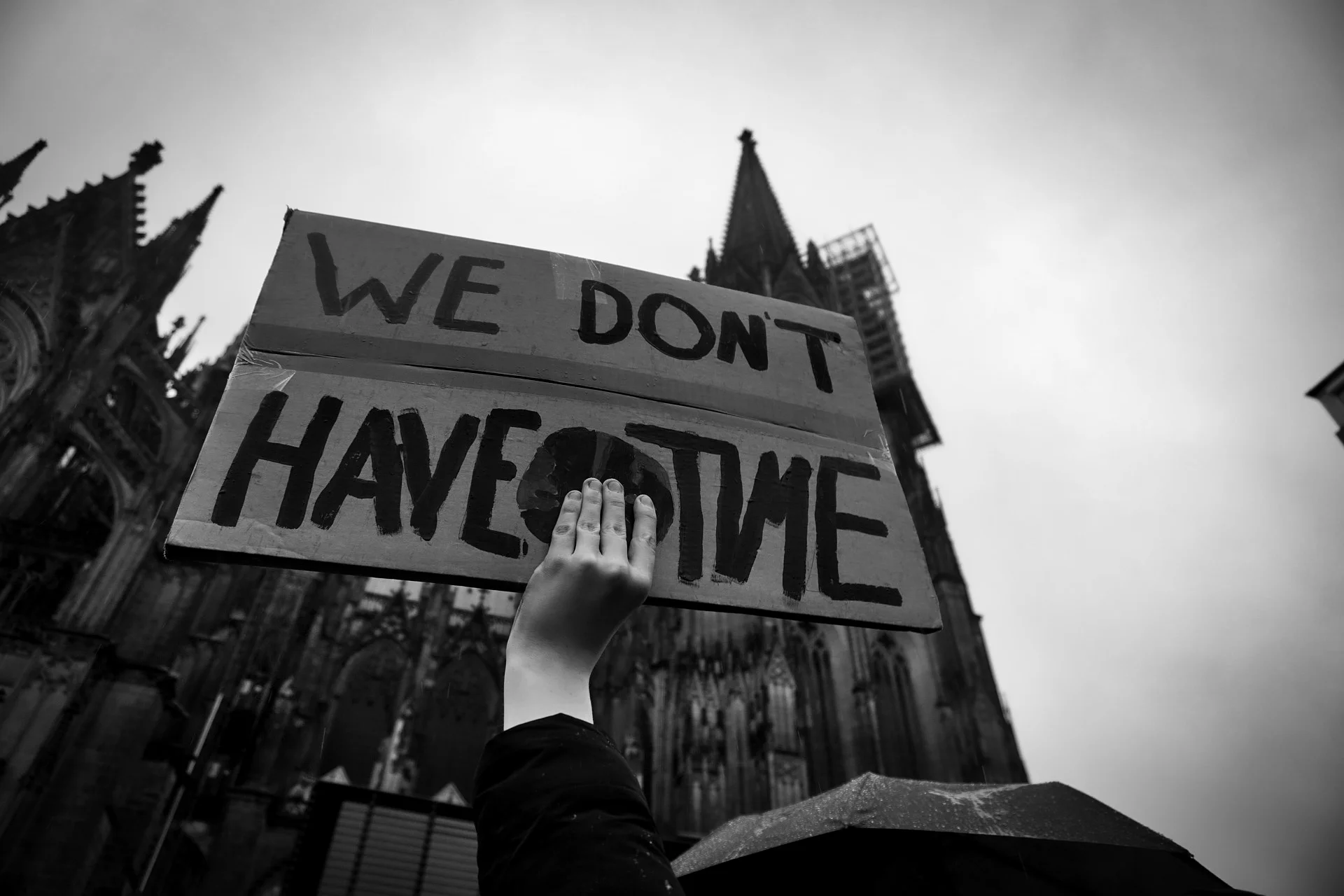
Awareness is a start, but as recent climate events have shown, action is needed now more than words.

Consider:

The five most common items found in coastal debris around the world are made of single-use plastic. Plastic food containers, bottle caps, lids, plastic bottles, straws and drink stirrers, plastic bags and cigarette filters top the table.

They’re also fairly easy to cut out of our day-to-day lives. Small steps can lead to big leaps. Cutting back on our day-to-day use of plastic can have a greater effect than may appear at first glance.

Consider, too, that there are 25 trillion pieces of plastic debris in the ocean, of which 270,000 tons float on the surface and some four billion plastic microfibres litter each and every square kilometre of the deep ocean.

A single straw plastic is just one straw, but multiply that by today’s total global population and you get more than 7.5 billion straws.

https://www.worldometers.info/world-population/

Plastics cause more than 80% of the deleterious effects on marine life associated with ocean trash. It’s estimated that plastic alone kills more than a million sea birds each year. More than 100,000 marine animals die each year from plastic entanglement and ingestion. A truckload of plastic enters the ocean every minute of the day. By 2050, there will be more plastic in the world’s oceans, by weight, than fish.

Since 80% of ocean debris originates on land, what we do here affects what happens at sea, for better or worse.

Oil spills are responsible for just 12% of the oil in the world’s oceans. More than a third of that oil, 36%, is runoff from coastal cities and industrial projects. Today there are some 500 dead zones in the world’s oceans. Taken together, they cover an area roughly the size of the UK.

Ocean pollution’s effects are long-lasting: Styrofoam takes 80 years to decompose. Aluminum takes 200 years; plastic takes 400 years.

What you can do — what anyone can do, really:

Reduce, reuse, recycle.

Boycott products — and grocery store chains — that use excess packaging. Use a reusable bag for shopping.

If you buy a product that uses a plastic “six-pack” holder — beer, soft drinks etc. — cut the plastic rings before disposing of them. In the ocean these rings expand, but don’t break, tangling and choking sea birds and other marine life.

Talk trash to your neighbours — literally. People won’t change what they don’t know about, so feel free to tell them.

Baby steps, sure, but every bit counts.

Pixabay
Pixabay

Tags: World Oceans Day, marine conservation, plastics, blue planet, recycle, talk trash, pollution, ocean pollution
©Niklas Pntk-Pixabay

©Niklas Pntk-Pixabay

Climate Crisis, What Crisis?

June 05, 2019
“It’s 2019. Can we all now call it what it is: climate breakdown, climate crisis, climate emergency, ecological breakdown, ecological crisis and ecological emergency?”
— Greta Thunberg

When does a single, distinct, meaningful element of speech or writing, used with other words — the dictionary definition — take on added meaning?

On this World Environment Day, it’s instructive to note that The Guardian recently changed its in-house style guide to more accurately reflect the threats that confront the environment. The style guide, used by reporters, journalists, columnists and the newspaper’s editorial board, will now use “climate emergency” and “climate crisis” rather than the more generic — and conservative — “climate change.”

Don’t expect the Daily Mail or the Telegraph to follow.

That doesn’t matter, though. Anyone well-informed and well-read enough to know the difference between “change” and “crisis” knows that the situation confronting the natural world is dire.

Crisis is a time of intense difficulty, trouble or danger.

An emergency is a serious, unexpected, and often dangerous situation that requires immediate action.

“Global warming” is yesterday’s news; today’s

generally accepted, environmentally correct nomenclature is “global heating.”

Some may favour “global overheating,” but the point is clear either way.

Other changes: “wildlife” instead of “biodiversity.” Wildlife is clearer, simpler and easier to impart — more Attenborough than MIT.

And then there’s “climate science denier,” instead of “climate sceptic.”

“People need reminding that the climate crisis is no longer a future problem,” Guardian editor-in-chief Katharine Viner said in April. “We need to tackle it now, and every day matters.”

Yes, yes, yes, the climate deniers say. But what if she’s wrong?

It’s World Environment Day. The more pertinent question may well be: Yes, yes, yes, but what if she’s right?

https://www.worldenvironmentday.global/

https://www.theguardian.com/environment/2019/may/17/why-the-guardian-is-changing-the-language-it-uses-about-the-environment

Tags: World Environment Day, The Guardian, biodiversity, climate crisis, climate emergency, word meanings, global heating, Katharine Viner
©Alex Strachan-Tarangire National Park, Tanzania.

©Alex Strachan-Tarangire National Park, Tanzania.

Hope for Elephants

June 04, 2019
“We have a responsibility toward the other life-forms of our planet whose continued existence is threatened by the thoughtless behavior of our own human species.”
— Jane Goodall

Elephant poaching in Africa may have peaked. A report in the peer-reviewed journal Nature Communications and reprinted in the May, issue of Science magazine, extrapolated from a survey by ecologists at the University of York (UK), suggests that ivory poaching has dwindled in recent years. Poaching peaked in 2011, when an estimated 10% of all elephants in sub-Saharan Africa fell victim to illegal hunting. Poaching had been on the increase since 2005, when a growing middle class in China flush with cash fuelled the demand for ivory, long treasured for carvings. By 2014, elephant populations across Africa had crashed by roughly a third from the turn of the century, to an estimated population of 350,000 animals.

The annual survey, conducted under the auspices of the Convention on International Trade in Endangered Species  (CITES), examined elephant carcasses at some 50 sites in parks and game reserves across Africa, to determine which elephants were killed by poachers and which died of natural causes. The survey is key because it’s believed to cover roughly half of the continent’s elephant population. Data collected annually over a 16-year period, from 2002 to 2018, shows that poaching is down two-thirds from 2011’s peak. While still not ideal — field biologists caution that the problem is not solved yet, despite declining demand from China — it hints at a brighter future

for hunted elephants. The major problems facing elephants today are climate change, dwindling food and water resources, and increasing human-wildlife conflict in areas where elephants invade agricultural land set aside for subsistence farms.

Demand from China has declined in part because of that country’s 2017 ban on ivory imports, and because of China’s slowing economy. A celebrity conservation ad campaign fronted by actor Jackie Chan and basketball star Yao Ming proved effective, too.

York ecologist Colin Beale, a lead author of the study,  cautions that elephants aren’t out of the woods yet, however. “It’s too early to be complacent,” Beale told Science magazine. If China’s economy heats up again, elephants may once again find themselves in the firing line.

The problems facing elephants aren’t limited to the question of supply and demand, as the recent lifting of the hunting ban in Botswana shows. Botswana is home to Africa’s largest surviving population of elephants, but too many elephants can result in habitat destruction for all animals. Poaching is also driven by poverty, government corruption and lax enforcement of existing laws.

The situation looks more promising than it did a few years ago, but the world’s largest land mammal isn’t out of the risk zone yet. 


Tags: elephants, ivory, ivory ban, Nature Communications, Science magazine, University of York, Convention on International Trade in Endangered Species, CITES, China ivory ban, Botswana hunting ban, Colin Beale, Yao Ming, Jackie Chan, elephant populations, elephant poaching
©Karen Arnold-Pixabay

©Karen Arnold-Pixabay

Rewilding the Wildcat

June 03, 2019
“As a young boy, I was obsessed with endangered species and the extinct species that men killed off. Biology was the subject in school that I was most incredibly passionate about.”
— Leonardo DiCaprio

There is a glimmer of hope, however. A new program underway in the UK hopes to breed wildcats in captivity and reintroduce them into the wild, largely in England and Wales, where they haven’t been seen for 150 years. Wildcats have not been recorded in southern England since the 16th century, but interestingly several wildlife trusts have identified parts of rural Devon and Cornwall as being ideally suited habitat for the wild cats.

This is no overnight fix but rather a program that even its most ardent supporters say will take years to realize. The program is patterned after a similar program in Switzerland that has successfully reintroduced European wildcats to Bavaria. That program took 20 years. Some 700 wildcats were successfully released into German forests from an initial captive population of 100 animals.

The UK may yet point the way for the future of the Scottish wildcat.

“Scotland and England may sometimes be rivals, but by geography, we are also neighbours. By history, allies. By economic, partners. And by fate and fortune, comrades, friends and family.”

— Douglas Alexander.

https://www.youtube.com/watch?v=rXPk0XHiuw8


“There are two means of refuge from the miseries of life: music and cats,” Albert Schweitzer famously said — but that hasn’t saved the wildcat from persecution in Scotland and the UK. “Rescued Scottish wildcat kittens among last of their kind,” National Geographic reported,  in a video posted on YouTube — last October.

The Scottish wildcat evolved from a population of European wildcats which became isolated by the English Channel some 9,000 years ago. They’re the largest of the wildcat family, and can grow to twice the size of your average couch moggy. Their fur is thicker and is marked by distinctive solid black and brown stripes, with a big banded tail.

Though adaptable to varied habitats, from moors and wetlands to mixed woodland and rural farmland, Scottish wildcats in serious trouble. Research suggests the only pure wildcats left — no more than 400 individuals in all — habituate a remote corner of the West Highlands.

The International Union for Conservation of Nature (IUCN) has judged the remaining wild population to be no longer viable, because of a high degree of inbreeding with domestic cats.


Tags: globaldealfornature.org, Global Deal for Nature, Scottish wildcat, European wildcat, International Union for Conservation of Nature, IUCN, National Geographic, YouTube, Department for Environment Food and Rural Affairs, DEFRA, rewilding, endangered species, reintroduction
Wiki Images-Pixabay

Wiki Images-Pixabay

An Ill Wind Blows

June 01, 2019
“Those who deny scientific findings in favour of magical thinking and other fallacies will only leave the world a more unstable and dangerous place for future generations.”
— Jennifer Collins, climate scientist, University of South Florida

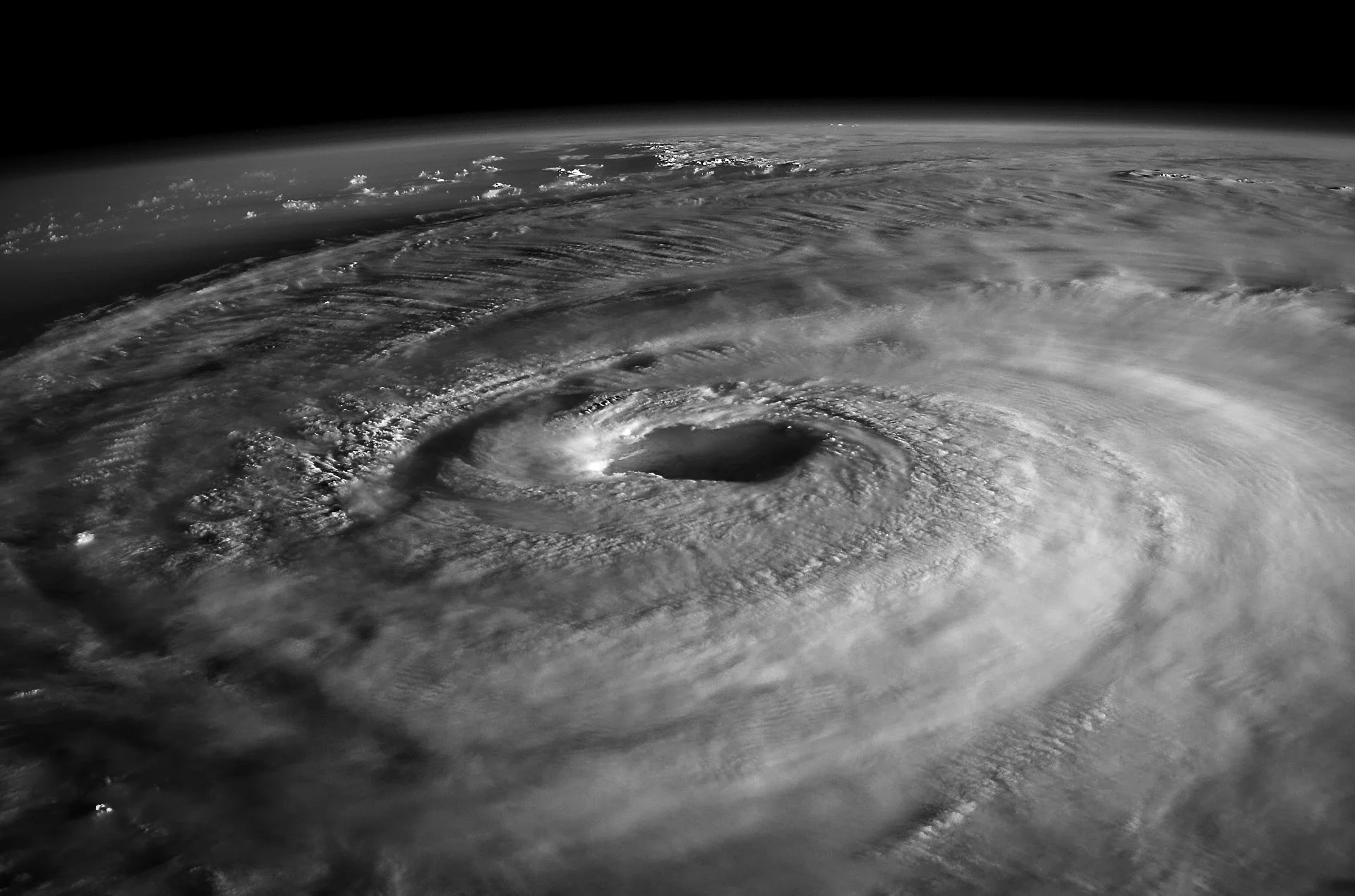
It has been a punishing several years for people who live in the path of hurricanes in the Atlantic. Hurricanes are low pressure weather systems that feed off warm water and atmospheric moisture. They always gather pace, unless slowed by dry air, crosswinds or landfall.

At their most basic, hurricanes are tall towers of wind which can grow as high as 60,000 feet (18,000 metres) in some cases — nearly twice the cruising altitude of most commercial airliners. Storms are given names once they reach sustained winds of 40 mph (65 kph) or more, and are measured on something called the Saffir-Simpson scale, which rates wind speed on a scale from one to five.

A storm is classified as a major hurricane once it reaches category three, which means wind speeds of 110 mph (180 kph) or more — enough force to damage homes and snap trees in half. A category five storm is one that reaches wind speeds of 160mph (260 kph), powerful enough to flatten communities, cause widespread power outages and result in numerous deaths.

Strong recent hurricanes include Katrina (New Orleans, 2005), Harvey (Houston, 2017) and Maria (Puerto Rico, 2017).

Hurricanes are in the public eye today because June 1 marks the official beginning of hurricane season, which runs until Nov. 30.

Today’s date is key because many climatologists believe global overheating will inevitably lead to bigger, more deadly hurricanes. An overheating planet means warmer oceans, which results in stronger winds, which in turn leads to more violent, intractable storms. More moisture in the air means more rain, which means more flooding in the storm’s aftermath.

Here’s why the experts are worried. The 2017 hurricane season unleashed devastation on a scale rarely seen before. Hurricanes that year caused a record USD $282 billion in damage; Hurricane Harvey alone unloaded 33 tn gallons of water on Texas. Winds unleashed by Hurricane Irma reached top speeds of 180 mph (285 kph) ravaged Florida, and residents of Puerto Rico are still counting the cost — in lives and property — of Hurricane Maria.

The overall number of hurricanes has remained roughly the same over the past several decades. The difference is that they’re intensifying more quickly, which has resulted in a marked increase in the number of stronger category four and five storms, and fewer category three storms. When hurricane force increases over a narrower time frame — 24 hours in some cases — it makes hurricanes harder to predict, and more likely to cause damage and loss of life.

The science is still out on whether the climate emergency is to blame, but it’s clearly not helping. There’s growing evidence that the combined warming of the atmosphere and ocean surfaces makes conditions for more intense, destructive hurricanes more likely. Much of that warming is due to human activity, through carbon emissions and our growing use of fossil fuels.

The real cause for concern, of course, is that there are more people in harm’s way today. In the southeastern continental US, coastal populations have increased by roughly half — 50% — since 1980. It hasn’t helped that environmental protection laws and emissions standards, passed by earlier presidential administrations, have been scrapped by You Know Who.

Tags: hurricanes, Harvey, Maria, Katrina, Houston, New Orleans, Puerto Rico, Saffir-Simpson scale, Irma, climate emergency, global overheating, Jennifer Collins, University of South Florida
Prev / Next

Journal

“Man is modifying the world so fast and so drastically that most animals cannot adapt to the new conditions. In the Himalaya as elsewhere there is a great dying, one infinitely sadder than the Pleistocene extinctions, for man now has the knowledge and the need to save the remnants of his past.”

— Peter Matthiessen


Featured Posts

Featured
1.bourdain hong kong.jpg.png
Aug 19, 2025
Bourdain in Hong Kong
Aug 19, 2025
Aug 19, 2025
1.ABPU_S11_Armenia3.jpg.png
Jul 21, 2025
Bourdain in Armenia
Jul 21, 2025
Jul 21, 2025
art1.jpg.png
Jun 25, 2025
Bourdain in Uruguay
Jun 25, 2025
Jun 25, 2025
1.bourdain congo2.jpg.png
Jun 8, 2025
8 June — Bourdain Remembered
Jun 8, 2025
Jun 8, 2025
1.Screen Shot 2025-05-27 at 5.41.13 AM.jpg.png
May 31, 2025
Bourdain in Southern Italy (with Francis Ford Coppola)
May 31, 2025
May 31, 2025
8.dsc09592.jpg.png
May 17, 2025
Bourdain in Puerto Rico
May 17, 2025
May 17, 2025
9.11216842-anthonybourdain-srilankajpg-c-web.jpg.png
May 4, 2025
Bourdain in Sri Lanka
May 4, 2025
May 4, 2025
b.art1.png
Apr 17, 2025
Bourdain in Lagos, Nigeria
Apr 17, 2025
Apr 17, 2025
1.art website.jpg.png
Apr 10, 2025
Bourdain in the French Alps (avec Eric Ripert)
Apr 10, 2025
Apr 10, 2025
1.art (2).jpg.png
Apr 2, 2025
Bourdain in Singapore
Apr 2, 2025
Apr 2, 2025